Showing posts with label Costa Prize. Show all posts

Friday, 11 January 2019

Making the Most of an Opportunity

By Candy Gourlay

Amazingly, my novel Bone Talk was shortlisted for this year's children's Costa Book Award.

Unfortunately (for me) the other three shortlisted titles –– The Skylarks' War by Hilary McKay, Orphan Monster Spy by Matt Killeen and The Colour of the Sun by David Almond – were pretty magnificent books. The winner, announced last Monday, was the uber-talented Hilary McKay.

On the night, my daughter cheered me up by awarding me with her own version of the Costa. And then we watched laughing baby videos for the rest of the evening.


To be honest, when the shortlist was announced. I was under no illusion about the possible outcome.

But there was no time to waste.

The shortlisting had created an opportunity. There would be more people paying attention to my book – many of whom would not have heard of me before. How was I going to make the most of the time between the announcement of the shortlist (in November) and the winner (in January)?

Opportunities happen all the time in this job. Tiny opportunities that are the building blocks of a platform. I'm not just talking short-listings and prizes. Opportunity also comes in small packages: completing a manuscript, learning a skill, attending a conference, the launch of a book, a positive review.

How do you make the most of your opportunities?

Don't Wait.

I suppose I could have waited until the winner was announced. But the shortlisting was THE opportunity. The winning might never happen (and it didn't). So whatever I decided to do, I needed to do it right away. No putting it off.

We all procrastinate, don't we? I can build that website later, post those photos later, work on those resources another day.

As a former journalist, I am keenly aware of the ephemerality of the news. Something in a blaze of attention today can turn cold and forgotten overnight.

Making the most of an opportunity means doing something while people are still paying attention. They're still receptive, still ready to share your good news. If you get the timing wrong, it will be too late. And you'll never get that white hot moment back.


Reach out to True Believers.

Like many authors, I am my own one-person marketing department. One thing I've learned is you just don't have time to go door-to-door, selling your goods to every individual you meet. Most people don't get this, hence the many invites to do free events because "it's good publicity!". Random targeting is a waste of time better spent writing another book.

Don't go door-to-door, go find True Believers. True believers, in marketing parlance, are people who are already interested in what you have to give. They want to know about you, and they will talk about you to their friends, who are likely to have the same interests. I quoted Seth Godin in a recent piece over on my author blog:

"You put an idea in the world. Not to everyone in the world, just to people who want to hear it. And then maybe it spreads. And if it spreads it grows. And if it grows you get to do it again ... The goal is to go the people who care. To invite them in and to tell them something they didn't know before ... Not with a grand opening but with a whisper. Here, I made this. That's our work."

I've discovered over the years that the people who really make a difference to my book getting read were not the individual punters I met at a festival, nor even the child readers who write me fan mail ... not even my large family in Manila, who have been known to create shortages of my titles by buying up all the stock in local bookstores. The people who make word of mouth happen about books are the children's librarians who champion books and put them into the hands of readers they know will love them. After librarians are the literacy advocates. And then maybe teachers.

Realising this, the challenge is: how do I connect with the people who want to hear about my ideas? Perhaps learning about them is a start, getting to know what makes them tick. This will give me the wherewithal to create work that truly matters to them – carefully considered essays, videos, etc –  rather than just fly-by sound bytes.

Make something that will last.

Yes, social media has made it easy to be our own marketing departments. But beware, the scrolling news feed and the disappearing Instagram story are only good for the moment.

Twitter and Facebook are superhighways that don't stop moving. It's all about reach, but not necessarily about engagement.

To make the most of an opportunity, you need to create things that have lasting value – something that adds to the sum of your public profile, ideas you will be building on, something that you and your audience will learn from, something that readers will continue to discover over time.

It might be a well-written essay filled with nuggets of wisdom that people are always searching for. It might be a How To video that anyone in search of guidance might access. It might be a podcast that can be shared and revisited over and over again.

My years of blogging on Notes from the Slushpile, for example, have made me a better author. They gave me a chance to reflect on the issues of publishing – and thinking is never wasted time. They had the incremental effect of helping me formulate opinions and ideas that I continue to refer to in my writings and presentations. More currently, I find that my writing on blogs and other platforms, has been helping me learn about diversity, cultural appropriation and other issues that, as an author of colour, I am frequently invited to comment on.

For the Costa shortlisting, it was important, I thought, to create something that would outlive the Costa buzz. Something for the immediate audience here in the UK, who are already familiar with the Costa. And something for the audience back home in the Philippines, who do not know about the Costa but who would be so pleased that a home-grown Pinoy was up for the award.

So I recruited the assistance of a couple of videogenic friends – fellow author Sarah Towle and Pinoy artist/editor/writer pal Joy Watford – to create interview videos about Bone Talk.  We made two – one in English, with Sarah, for British readers, and the other, with Joy, in Taglish (Tagalog and English) for Filipino readers.

Filming a Taglish interview with my friend, Joy Watford. We filmed it using the selfie camera of my Android phone  attached to dual lavalier microphones. As you can see, we forgot to tidy the book case behind us.


They were not short videos so I published them on my YouTube channel, which is a platform where people take more time to watch longer form stuff (unlike Facebook and Twitter where a minute is a long time, and people zoom through videos,  often not even bothering to turn up the sound).

The videos are not for casual passers by. I made them for people who are prepared to make the time to watch – maybe someone who's read and loved my book, a teacher who would like to teach it, a librarian who wants to know more so that she can share it with more readers, a bookseller who would like to hand-sell the book.

I'm not expecting masses of traffic. And I'm not hoping for an instant spike in views either. I'm happy for people to discover the videos over time.

"The goal," Seth Godin said, "is to go to people who care." I know this is going to be a quality audience.


Make it matter.

We authors do so much for scrolling newsfeeds. Partly because it's compulsive. You can't help yourself when you feel the the newsfeed's siren call. We pretend that it's work, that it's all in aid of the author platform our publishers expect us to have. But deep down, we know our posts are destined to be forgotten. The social media superhighway moves too quickly and too many people are on the highway already.

So how do we make an impact on social media?

How do we make what we do matter?

Slowing down is one way. Posting less, and leaving your posts there for enough time to be found, to gather attention.

Another way is by being more selective about what you share and when you share it. The less dross you post, the more people take you seriously and want to see what you have to say.

It also means taking the time to put your post into context, so that it's value is clear to the audience. Why am I sharing this? What does it mean to me and my books? Why should it be of value to you?

For the past few years, I have favoured Facebook and Twitter, neglecting my websites and blogs for the ease of microblogging and the instant gratification of the scrolling newsfeed.

But now I want to invest effort into making things that last,  that continue to be relevant beyond the spark that led to its creation. This year, I'm going to test this by using platforms that aren't ephemeral: platforms that won't scroll away and disappear.

I'm ready for a change.

I'm ready to make the most of every opportunity.

I'm ready to make it matter.


Candy Gourlay is leaving Facebook. Read why here and here. Please stay in touch via Instagram, Twitter and via her website www.candygourlay.com

Friday, 14 April 2017

Second Book Syndrome

By Kathryn Evans


Is it even a thing? Second Book Syndrome? Surely, once you've been published, your confidence is sky high and your second book just OOZES out of you.

Not in my experience. I am currently trying to turn my second book into something worthy of the name and it is HARD.  Especially as my wonderful editor  pointed out, it shouldn't be AS GOOD as the first book, it needs to be BETTER.

And she's right. I know she is.

 On paper, this is me:

Kathryn Evans, author of More of Me, winner of the Edinburgh Book Festival First Book Award, Nominated for the 2017 Carnegie Medal, shortlisted for multiple regional awards and translated across the globe.

In reality, this is me:


What If The Next Book Is Rubbish?

 I have readers who want to read what I write next because they loved More of Me. I need to blow them away with Book Two. It needs to be brilliant, to be different and fresh and full of depth and have amazing characters and a plot that zooms along and tension that keeps you turning the pages and..
AND 

AND

AND

Oh yes. Second Book Syndrome exists. You've got  expectations to fulfill.

So, I did what I always do in an MODP (Moment of Deep Panic), I turned to my writer pals for advice and reassurance. They did not let me down. Many, many writers have suffered Second Book Syndrome. Not Chris Priestley, just so you know, he's got his own Syndrome Syndrome in which he's worrying he doesn't have a Syndrome but THAT is a whole different story.

Here's what the others had to say:


Sue Wallman

Sue Wallman  is the author of YA psychological thrillers Lying About Last Summer ( Selected for the Zoella Book Club)  and See How They Lie


Sue Wallman

"2nd (or 3rd etc) book syndrome is for me a terrible panicky feeling that things aren't coming together. Sometimes I think it takes a long time to fall into your story because your heart still belongs to the characters in your last book, or you've simply forgotten how hard writing and rewriting actually is. The only solution I know is to keep chipping away and trust that you'll get there eventually."

That made me feel a little better until I read:

Rhiannon Lassiter 

Author of Void: Hex, Shadows Ghosts:

"Your second book should be entirely different from your first. It creates range and space and avoids being trapped in a box. That's not what I did, of course."

NOR ME!!!! Is that true? Please let that not be true!


Cath Pickles

 Author of the Worzel books:

"The worst thing you can do with a second book is think about it too much"

All I DO IS THINK ABOUT MY STUPID SECOND BOOK!!

Jo Franklin

Help I'm an Alien author, is always practical:

"It's easier to write book 2 if it's a series, as you already know the characters and their world. Though writing for an editor, rather than yourself, brings a whole new anxiety. It's best to get Book 2 well underway before Book 1 is out. The anxiety about securing a second book contract is another matter entirely."

Tell me about it!


 Miriam Halahmy 
 Author of Hidden and Illegal:

 Miriam is now on her seventh book and says she didn't suffer from second book syndrome. She's now in the process of finishing her seventh novel.

 It's kind of nice to know it doesn't afflict everyone.


Shirley Mcmillan

Shirley's debut, A Good Hiding, came out last year.  The Unknowns will be published by Atom ( Little, Brown) at the end of 2017:

"I finished my second book a week before the deadline. How clever of me! I thought. And then, immediately, The Fear. The first book, A Good Hiding, was written during a Master’s degree when I had more time and fewer children, and, crucially, nothing at all to lose. The second was written under contract, with a small teething child and a first book to promote and OMG WHAT IF THE FIRST WAS A FLUKE AND THIS ONE IS SH*T AND MY LOVELY AGENT AND AMAZING PUBLISHER ARE ABOUT TO FIND OUT THAT THEY MADE A MASSIVE MISTAKE?! During that week I sent my new one off to several friends, one of whom read the entire thing, all of whom emailed their reassurance. At the end of the week, I let it go. That was the lesson- do your best, try to trust yourself, and then let it go."

That's better, I found that very reassuring - until I realised - she'd  written her second book before her first book was even out !!! 

Patrice Lawrence  


Patrice's debut Orangeboy was shortlisted for the Costa Book Award, and won the Waterstone's Older Children's Book Prize and is garnering accolades EVERYWHERE:


"You have a bubble of an idea. It gets bigger and bigger and then it bursts. You look around for more bubble liquid but either there's a big vat of it and you get carried away blowing loads of tiny bubbles, or there's a dribble in a bucket, far, far away. So how come the bubble turned out all right last time? Was it really this much work?"

Eugene Lambert 


Author of The Sign of One and Into The No Zone,  the first two books in a trilogy:

"As an inexperienced debut author, I signed up to write a trilogy, thus unwittingly walking into a lethal combo of second book syndrome plus middle book syndrome. The latter has at its conflicted heart the brain-numbing dilemma of trying to write a book that is ‘more of the same’ (so that it will appeal to the reader of the first book) while at the same time ensuring that it is sufficiently ‘different’ not to be a clone. Oh yeah, and it has to set everything up for the grand finale in book three, where everything is resolved. Or not. Whoever said that the middle book was the hardest to write in a trilogy was NOT kidding! 

My advice? Just have fun raising those stakes higher and higher …

Olivia Levez 


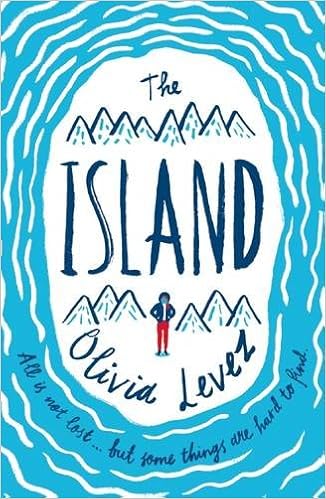
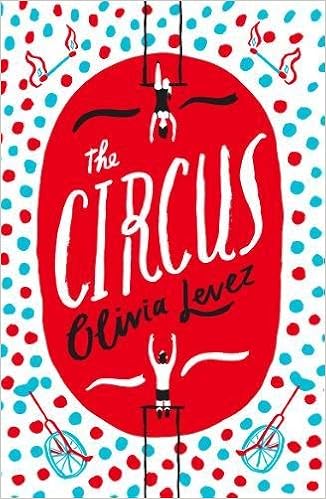
Star Kirkus Reviewed author of The Island and The Circus, due out in May but which I've already had a sneaky peak at and LOVED says this:


"I hit the wall at 30,000 words THREE times. Need I say more?"

Okay, that's better. If Patrice has bursting bubbles, Eugene has muddling middles and Olivia hit the wall three times and they still got there, I can do it too!


Kiran  Millwood  Hargrave 


 Author of the wonderful The Girl of Ink And Stars, winner of the Waterstones younger children's book award AND the overall winner :

"I wrote the first (short, terrible) draft of 'The Island at the End of Everything' at my grandparents' house in Norfolk, in three desperate weeks after 'The Girl of Ink & Stars' was put out on submission. Fuelled by ale and tears, I paused only to read the rejection emails pinging into my inbox. The Island at the End of Everything is quite different from 'The Girl of Ink & Stars', and maybe some of that is knee-jerk reaction to the feedback I was getting. In any case, I trusted my ability to finish a lot more because I'd finished one already - and that was something, even if the first wasn't going to be published. Two days after I finished my first draft, I got my offer from Chicken House."

Keren David


Keren has written many fantastic books including  When I was Joe, Salvage, Another Life and This is Not a Love Story.

"I had Third book Syndrome, not Second Book Syndrome, because my second book was a sequel and it was already half written when I got my first publishing deal. But my third book - Lia's Guide to Winning the Lottery - was harder. I had a deal, and therefore a deadline. My mum was ill, and my husband was considering a job abroad. I had a new narrator, and instead of writing a psychological thriller, I was trying a romantic comedy. It wasn't easy, and I ended up finishing the book i a massive rush - the ending had to be completely redone in the editing stages. Funnily enough, it's the book that has had the longest afterlife - we're adapting it into a musical, so I have been thinking and talking about those characters and that story for years now. I feel forever trapped writing and rewriting that third book - but loving it!"

Eve Ainsworth 


Award winning author of Seven Days, Crush and the newly published Damage :

"I found writing my second book difficult in that I had an editor now, and someone "to please" but Crush slotted in well with  Seven Days. Book three, Damage, was far, far harder for me - more challenging to break away from the setting and voice I'd already established."

So basically, this gets worse????
Somebody save me!


Wednesday, 6 February 2013

We children's authors are a supportive bunch, cheering each other on through gritted teeth

By Candy Gourlay

Hilary Mantel (Photo: Harper Collins)
Go, Hilary!

After winning the Booker Prize a second time (with the second book of her trilogy), Hilary Mantel also grabbed the Costa Prize. £30,000 prize money. Blimey.

Sally Gardner of course won the Children's Costa for Maggot Moon.

Share buttons bottom

POPULAR!