Friday, 6 July 2018

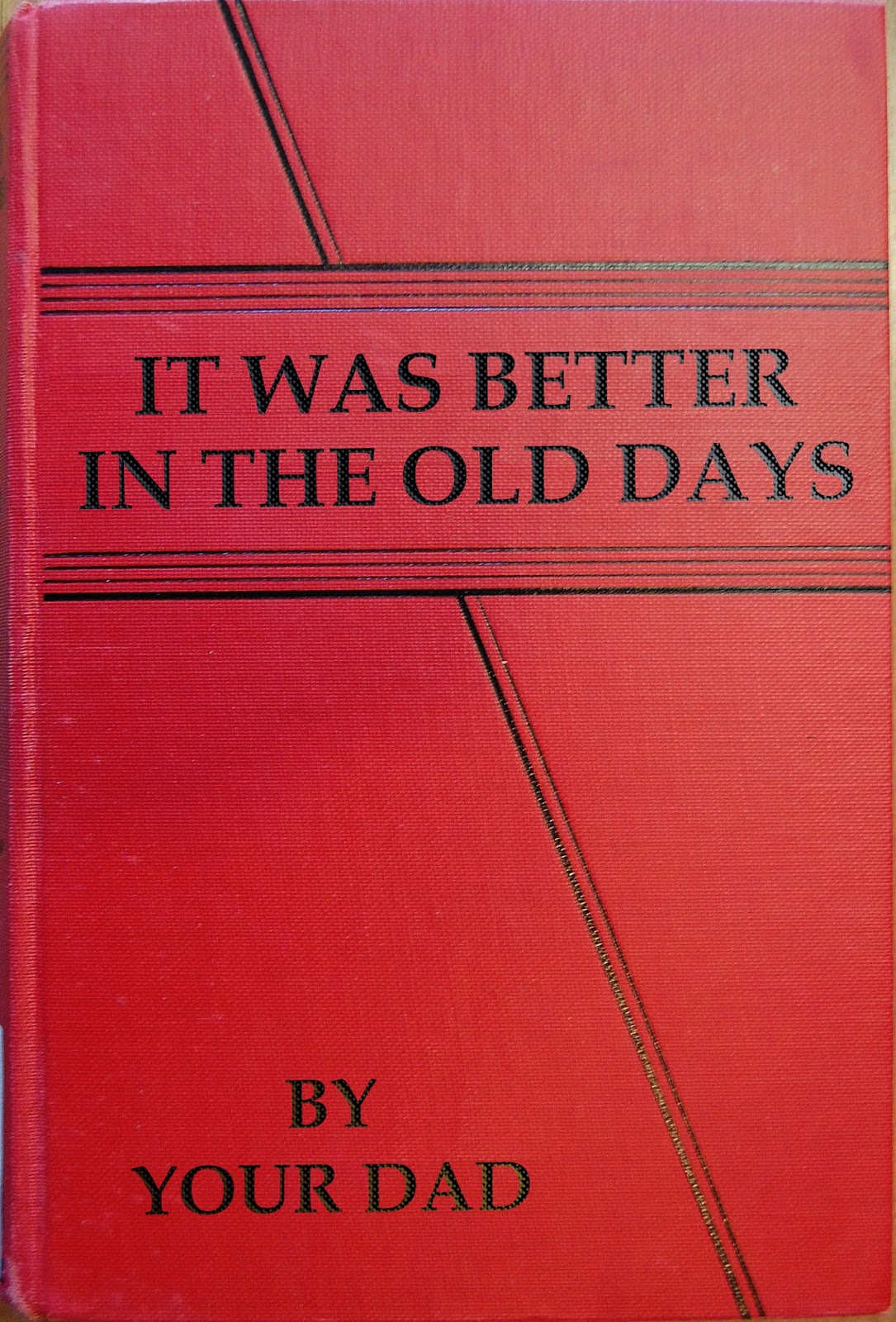
How to Keep Nostalgia in the Past

By Nick Cross

Source image by Crossett Library

I’ve just finished a teen novel set in the early 90s, and it’s been wonderful to step back into a world without mobile phones, where tactile, analogue technologies like cassette tapes and vinyl were all the rage. Each time Donald Trump tweeted, or Snapchat redesigned their app, or something like #MeToo happened, I thanked my lucky stars that I wasn’t trying to write a story about modern teenagers. But there’s a flipside to writing a tale set within my own lifetime - I found myself constantly battling the seductive allure of nostalgia. The last thing I wanted to do was spend the whole book saying stuff like “Ooh, do you remember this? Wasn’t it great!”

“What’s so bad about nostalgia?” you might be asking. “Isn’t it all just harmless fun?” Maybe in small doses. But taken too far, nostalgia can be shaped into a dangerous lie. Without the pernicious effect of nostalgia telling us that things were better in the old days, would we have ended up with Brexit or President Trump?

What I particularly dislike about the use of nostalgia in fiction writing, is that it allows the author to choose easy truths, and prevents them digging deeper into the reality of what life was really like. Seen in this way, nostalgia becomes another form of privilege: because we remember living through a period in a certain way, we assume our experience was universal. And more than that, human memory is notoriously fallible. As writers, we owe it to our readers to do the research, so we can represent the characters’ experiences as faithfully as possible.


I’ve been fascinated by the phenomenon of nostalgia for many years. Even as a young adult in the 1990s, I was surrounded by people reminiscing about the 60s and 70s. I can remember my university friends getting dewy-eyed about Mr Benn or Alberto Frog and His Amazing Animal Band (look it up - or better still, don’t). In the mid-nineties, my friend Stefan and I created The Encyclopedia of Cultural References, a sort of anti-Wikipedia filled with lies and falsehood. For months, we wrote bizarre articles in which Roald Dahl was a secret Marxist trying to write “the definitive radical existential socialist children’s book”, or the Golden Delicious “Le Crunch Bunch” were hapless pawns in a vicious trade war between France and England (sound familiar?) Over time, these jokey satires have been subsumed by real-life events - who could have possibly imagined the grim reality of Rolf Harris’s off-camera life?

This is just one of many examples that show things were not always rosy in the garden, even if they appeared that way to our childhood eyes. So how can we, as authors, overcome our own in-built sentimentality towards the recent past?

  1. Know your audience
    How many times have I typed those three words in a blog post like this one? A lot. But that doesn’t make it any less true. If your audience is a bunch of adults roughly your age, then carefully deployed nostalgia can be a good way of engaging with them. I myself used nostalgia to get a laugh in my video introduction for last year’s Crystal Kite Award. But if your audience is a group of fifteen-year-olds, tread carefully. You might get a reaction from referencing exactly the right Cbeebies show, but you also might fall flat on your face.


  2. Highlight the bad along with the good
    Nostalgia is all about slipping on those rose-tinted glasses and indulging in a major feat of selective memory. But here’s a newsflash - whenever and wherever you grew up, your teenage years basically sucked! You don’t have to write a 500 page misery memoir, but equally, don’t sugar-coat stuff. Teen readers can spot a faker a mile off.

  3. Tap into the feelings, but not necessarily the details
    If you’re writing a YA book, the chances are that you’re probably carrying a lot of angst around with you. That’s great - let it all out! But mapping your own feelings onto the experiences of a fictional character can help you maintain some distance, and make it easier to see what’s best for the story.

  4. Ask yourself: is this bit of writing for me, or for the reader?
    If it’s just for the reader, that’s fine.
    If it’s just for you, remove it.
    If it’s for both of you, then great!

  5. Pick an area that you don’t know much about
    This is what I did in my book, although it wasn’t a deliberate strategy to avoid nostalgia, but more because that was what I wanted to write about! However, incorporating some unfamiliar settings, characters or themes will stretch you as a writer and force you to do additional research into the period.

  6. Don’t assume the good times are behind you
    We all fear getting older, and because the past is set in stone, it’s easy to imagine that our lives were better then. But the truth is that we have a huge capacity to grow and change, which is a big part of why we became writers in the first place. I don’t know about you, but I’m 46 years old, as fit and healthy as I’ve ever been, and I just wrote a kick-ass novel that I’m incredibly proud of. I’d say life is pretty good right here in 2018 :-)

So there you have it, six simple steps to banish nostalgia forever. But before you go, could you answer me just one question? Don’t you think my blog posts were better in the old days?

Nick.


Nick Cross is a children's writer/illustrator and Undiscovered Voices winner. He received a SCBWI Magazine Merit Award, for his short story The Last Typewriter.
Nick is also the Blog Network Editor for SCBWI Words & Pictures magazine. His Blog Break column appears fortnightly on W&P.

Monday, 2 July 2018

Do not interrupt.


One of the notices I have on the wall above my laptop says:

DO NOT INTERRUPT!

It's not a message aimed at the writer's usual domestic distractors – pets, spouses, children, chores – but at myself.

Because the truth is, it is not the outside world but my own weak will that is the greatest barrier to good wordage.

I am not even talking about the internet, Facebook and obsessive inbox checking.

I am talking about interrupting story. My own story.

Something is happening in the story. It's compelling, exciting. The reader is transfixed. As the something happens, a character is triggered to remember something else. The Something Else is relevant to the something actually happening on stage. The Something Else explains stuff about the main something. Sometimes the Something Else triggers another something else that triggers yet another something else.

Only when all is explained does the story circle back to deliver the pay-off promised by the first something.

By that time, the reader's mind has already wandered to whether or not to put another load in the washing machine.

We novel writers do this self interrupting all the time in our first drafts, when we are still trying to figure out our stories. The interruptions are us explaining our stories to ourselves. But this sort of jumping around has no place in the final draft.

Go on, re-read the first chapter of your manuscript. Are you cutting away to explain tiny bits of background? Then you have work to do.

The screenwriting guru Robert McKee defines story structure thus:

STRUCTURE is a selection of events from the characters' life stories that is composed into a strategic sequence to arouse specific emotions and to express a specific view of life.
Admittedly, the first time I read that dense sentence – which was before I'd ever written a novel –  it compelled me to go and put another load into the washing machine.

I only appreciated McKee's meaning after I had experienced the labyrinthine problem-solving involved in novel writing.

"SELECTION OF EVENTS"

... meaning, don't include events that only serve to bore your reader.

My favourite explanation of this comes from Kathleen Duey, author of the astonishing Resurrection of Magic books. Duey says writing a scene is like shining a spotlight on a stage. The world of you story is all there, on the platform, but you, the author, chooses what the reader should know, at every single moment.

So interrupting your story is akin to the spotlight going dark on the hero and an extra four or five spotlights suddenly picking out actors on different parts of the stage, performing scenes from different parts of the story.


It is harder to avoid this than it sounds. When I was beginning to write novels, I was constantly trying to explain background, afraid that the lack of information will drive the reader away. It took nerve to accept that it is this lack that keeps the reader reading.

Says the author Pat Conroy (Prince of Tides): '... I want a book so filled with story and character that I read page after page without thinking of food or drink because a writer has possessed me, crazed me with an unappeasable thirst to know what happens next.'

But we can't help being driven to explain our story – in big, clumpy info-dumps and in tiny darting asides. The craft of writing a novel that can possess a reader, that can create that thirst to know what happens next is to know when and how to reveal this information.

"STRATEGIC SEQUENCE TO AROUSE SPECIFIC EMOTIONS"

Have you ever verbally told a story to a friends, then realised it would get a better reaction if you set it up a little bit better, and interrupted yourself saying, 'Oh wait, before I tell you that, I have to tell you this!'

This is why we interrupt ourselves.

We realise that the story would be better told – nay, better experienced by the audience – by laying more groundwork.

This is what we are doing when we interrupt a scene to cut away to some information.

But unlike a story told in conversation, we novelists don't have to interrupt ourselves. We have time to take that nugget out and put it where it belongs.

When critiquing opening chapters and I suggest to a fellow writer that cut-away information should be separated out and written up properly as a scene, the suggestion is often met with resistance.

The most common reason to resist is that the opening chapter is an explosion – it has been written specifically to hook the reader. The writer is only following advice to be found in countless places on the internet and in writing books. So if they insert a set up chapter before their exploding chapter, wouldn't they be missing the chance to hook the reader?

I think this misunderstands the idea behind hooking a reader.

What hooks the reader? Emotion.

An explosion can do it, causing fear, excitement, the desire to find out why ... but re-read your work carefully. Explosions can be humdrum too. Like the ones that come at the end of every superhero movie, the ones that you don't have to watch because you've seen it before.

So hooking the reader is about strategy. About finding the emotion that will keep him turning the pages. Sometimes, that emotion can be had without an explosion.

INTERRUPTING EMOTION


The first time you write your novel,your only strategy is getting to The End.

But once you've got it down, and you have time to examine the scenes you chose to lay down on paper, your strategy should shift from satisfying your own need to tell the story to mapping your reader's emotional experience of your book.

Revising with our reader's emotional arc in mind is a good way to weed out those tiny interruptions that we all seed into our chapters.

I wrote about it in detail back in 2016: Exposition: it's about emotion not information – in which I quote film editor Tony Zhou:

"Emotions take time ... Editors have to decide how much time to give an emotion."

Actually, Tony was talking about character emotions. But when you're revising your manuscript and strategising about how much time to give a scene on stage, spare a thought for the reader.

If you keep cutting away to fill in information, you are dampening the emotional impact of your scene.

And no, don't just cut it out. You put it in because you knew it was necessary. Now you need to craft a place for it in your narrative. This is not a nuisance but an opportunity to deepen and enrich your story.

Good luck.


Candy will be joining Lisa Williamson (The Art of Being Normal) and her editor Bella Pearson in a discussion of Writing Other Lives on 3 July 2018. Book your place here. Candy's third novel Bone Talk will be published in August. Find out more.

Friday, 22 June 2018

Why we (writers especially) should all love the Moomins


It's the 22nd June which is officially just gone the middle of Summer which in turn means that we'll be on the countdown to Christmas pretty soon. Naturally, I cannot let this time slip by without referring to the Moomins - those adorable, testy, life enhancing, tough and bold characters dreamed up by the brilliant, Tove Jansson.

Image result for tove jansson
Tove Jansson
Anyone who knows me, knows that I am very fond of these books and characters. In fact, the very lovely, Jo Wyton, bought me this book for my birthday...


which was as generous and awesome a gift as any moomin would give (I think that makes you an honorary moomin, Jo, Moomintroll?). It is a wonderful reference guide by the very bearded, Philip Ardagh, to all things Moomin.


Hers is a unique world; a unique vision. It is a world of magic and melancholy, of friendship and family and love, all told with a simplicity and clarity that belies Jansson's remarkable insight into even the smallest creature's hopes, fears and dreams ... And it is peopled with a most heart-warming array of living, breathing funny and lovable characters to be found between the pages of any book. Philip Ardagh (The Ancestor?)


What's so great about the Moomins? Where they live!

They live in a house, which sits in a valley, near to the sea

Image result for moomin's house
does the charm of this setting need explaining? If so, do NOT read on

When one of the many extraordinary-ordinary characters, the free-spirit, Snufkin, returns from his travels, he sees:
There below him lay the Valley of the Moomins. And in the middle amongst the plum and poplar trees, stood a blue Moominhouse, as blue and as peaceful and wonderful as when he had left it.
The Moomin house is central to the stories. It is a home to anyone who needs it, including a reader who can settle in and recognise family loves and woes, the comings and goings and food; yes, they drink coffee. Everybody knows about the Moomin house, even those who live far away. Even if they know nothing of the Moomins, visitors to the valley will drift towards the house and make themselves at home in this most welcoming of places with that most accepting and welcoming of mothers, Moominmama - the roundest, most comfortable and sensible of Moomins.


Plus, who can't love someone who has a beloved handbag which was once taken by Thingumy and Bob because they liked sleeping in 'pittle lockets'.


What reader could not want someone like her in vague charge. She usually always knows what to do and you really, really need that in a world where magic and change and difficult characters, live side by side.


What's so great about the Moomins? The characters!

Which brings me to my next reason for loving the Moomins. If you have never read a Moomin book you may think that these are mere cuddly, wuddly, characters who have nothing much to say. Wrong.

Moominvalley characters may be different and yet we all know them! Tove Jansson gives us every facet of human nature and makes them familiar even in their strangeness to the reader. The immediate Moomintroll family is a tiny bit dysfunctional. Moominpapa has an adventuring heart and always wants to be off in the boat without proper reference to the feelings of Moominmama or Moomintroll in these matters. On the plus side, his family does go with him and have great adventures which only sometimes end in disaster. And Moomintroll has inherited this thirst for adventure, his curiousity

"I think it's very adventurous to float down a winding river," said Moomintroll. "You never know what you'll meet around the next corner." Comet in Moominland

The batty but wise older relation comes in the form of the Moomins' Ancestor who lives in the stove and is incredibly old. He's even older than Grandpa Grumble, who likes a moan. And definitely hairier.


I don't think the Moomins are related to Little My but she spends a lot of time at their house being either, 'glad or angry'.
'Little My is used to taking care of herself ... I'm more worried about the people who happen to cross her path." Moominsummer Madness 
The Hemulens are very fond of rules and can get quite upset when people refuse to take them seriously.


We have the calm thinker, Too-ticky


The child-like, Sniff who wants adventures but when they arrive doesn't know what to do with them.


"Sniff lay under his blanket and screamed." is a fairly typical reaction


Yeah - we've all been there.


Oh, so many minor, brilliant characters. Like The Woodies; 24 tiny children who were lost or abandoned in a park but don't worry they were later rescued by brave Snufkin (although he came to slightly regret it what with all their crying and arguing). Or the Niblings who had the bad habit of chewing off noses if they're too long. And then there's the curious Hattifatteners

".... the little white creatures who are for ever wandering restlessly from place to place in their aimless quest for nobody knows what." Comet in Moominland
And why not.

What's so great? Exciting stuff happens!

This is no sleepy valley where nothing the weather and land stays quiet. There are actual disasters to overcome. When a volcano erupts, Moominmama is quite put out:

"Oh dear me," she said. "What a terribly hot and sooty day. Volcanoes are such a nuisance." Moominsummer Madness
Then there was the tornado which blew the roof of the Fillyjonk's house and the flood which sent the Moomins packing. Only for them to take shelter in an abandoned theatre where the only thing to do was to put on a play for everybody - of course.


Catastrophes happen but the Moomins are never defeated; they simply make the best of it because that's really all you can do.

What so great about the Moomins? There's magic in the air!

The Hobgoblins Hat brings chaos. Midsummer Eve brings a time for wishing. Moominpapa has his very own crystal ball. There are even ghosts. And then there's one of my favourite characters, the invsible Child or Ninny who was so scared that became 'misty and difficult to see'. Don't worry, she nearly recovers eventually.


Why should writers love the Moomins? 

They are cuddly (not all of them - Hattifateners *shudder* but I want to hug lots of them).

They eat proper food, even coffee (I do have a Moomin recipe book)

There is always dark and light in the stories

They have Big Ideas which sometimes don't work but they're not afraid to try them out.

They are sometimes sad. And that's okay.

They make the best of testing situations

They do not judge

Apart from being HUGELY entertaining, the Moomins and all their friends and relations, exist inside the sort of world you never want to end. Tove Jansson also offers an alternative philosophy. Don’t fear the unexplainable or waste time worrying about things that can’t be solved or changed. If your house floods, make the best of that upside-down-view of your kitchen. Live like a Moomin… unless there’s ever a volcano that’s about to erupt near your house. Then maybe it would be better to leave.

Share buttons bottom

POPULAR!