Friday, 30 November 2018

Finding Your Voice

By Em Lynas

Picture by Geoff Lynas
I have second book syndrome. I'm afraid that the voice of my next character driven book will have the same voice as my last character driven book. Daisy Wart's voice is so big and dramatic and opinionated that she's taken over my mind. I need to shush her and let other voices in. So I've been re-reading my VOICE mentor texts.

Reading these texts is like a wine tasting - I get - opinions, personality, syntax, tone etc. I’m just giving you a flavour of a few of my favourite voices. First up for tasting:

Georgina Nicholson in Angus Thongs and Perfect Snogging, by Louise Rennison.  

"I am fourteen years old, Uncle Eddie! I am bursting with womanhood. I wear a bra! OK, it's a bit on the loose side and does ride up round my neck if I run for the bus... But the womanly potential is there, you bald coot!"

I'm getting - big personality, loud, opinionated, comic, irreverent.

Use of Language:
The language is spot on teen plus there's the technique of adding a suffix to a noun. E.g. "I would like a proper amount of breastiness."

Bertie Wooster in The Mating Season by P.G Wodehouse.

"While I would not go so far, perhaps, as to describe the heart as actually leaden, I must confess that on the eve of starting to do my bit of time at Deverill Hall I was definitely short on chirpiness."

I'm getting- humour, a people pleaser and victim.

Use of Language: Wodehouse turns the ordinary into the extraordinary making us think and take part in the story with his use of analogy and metaphor.
Ordinary adjectives are replaced with amusing adjectives. E.g. "I mentioned this to Jeeves and he agreed that the set up could have been juicier." Juicier is so much more fun to say than better.
There's exaggeration e.g. "My Aunt Agatha, the one who chews broken bottles and kills rats with her teeth."

Mattie Ross in True Grit by Charles Portiss

“People do not give it credence that a fourteen year old girl could leave home and go off in the wintertime to avenge her father’s blood but it did not seem so strange then, although I will say it did not happen every day.”

I’m getting – unusual character, resilient, determined, an honest person with a strong sense of justice and fair play.

Use of Language: The book (and film which is true to the book) has an amazing voice that comes partly from the lack of contractions in the dialogue and prose (because it’s Mattie narrating) but also because the vocabulary is limited, there’s very little description and it reads like a list of facts and statements. E.g. “Tom Chaney said he was from Louisiana. He was a short man with cruel features. I will tell more about his face later. He carried a Henry rifle. He was a bachelor about twenty five years of age.”

I have other mentor texts but my favourite voice at the moment is -


Flora in Cold Comfort Farm by Stella Gibbons.


Not just Flora’s voice but everyone’s voice. Every character  in this book has strong opinions on every other character, their world, and the unfairness of Robert Poste’s child (Flora) turning up to (they suspect) claim her inheritance.

There are echoes of Wodehouse which is always a treat.
“Have you a plane, Charles? I don’t think an embryo parson should have a plane. What breed is it?”

These are just some of my favourite bits that delve into character.

Flora has decided to live with relatives rather than work for a living and the Starkadders of Cold Comfort Farm are the only ones available.

Flora on – not working: “Well, when I am fifty-three or so I would like to write a novel as good as Persuasion, but with a modern setting, of course. For the next thirty years or so I shall be collecting material for it. If anyone asks me what I work at, I shall say ‘Collecting Material’.

Flora on – going to live with the Starkadders - “On the whole, I dislike my fellow-beings; I find them difficult to understand. But I have a tidy mind and untidy lives irritate me. Also, they are uncivilized.”  

Flora on Amos – He was encased in black fustian which made his legs and arms look like drainpipes, and he wore a hard little felt hat. Flora supposed that some people would say that he walked in a lurid, smoky hell of his own religious torment. In any case he was a rude old man.

Seth on women – “Women are all alike – aye fussin’ over their fal-lals and bedazing a man’s eyes, when all they really want is man’s blood and his heart out of his body and his soul and his pride…”

There is so much to mention, too much for a blog, and I'm still analyzing for techniques, but these are a few of the things that hooked me. 

I love that the Starkadders call Flora, Robert Poste’s child, throughout the book. I love that Aunt Ada Doom doesn’t come out of her bedroom because, “I saw something nasty in the woodshed.” I love that the cows are called Graceless, Pointless, Feckless and Aimless which sets the tone so well for the condition of the farm and animals. I love that Seth goes mollocking and I don't know what that means but I can have a good guess. (I have looked that up and my guess was confirmed.)

I love so much in this book. If you haven’t read it yet just read this last bit (too long to type!) and you’ll be hooked too.


Happy reading!

See part 2 of Finding Your Voice here 

Em Lynas is the author of the Witch School Series published by Nosy Crow


Wednesday, 28 November 2018

Why you should go to the annual SCBWI conference!

by Paula Harrison

Ten days ago I came back from the annual SCBWI (UK) conference in Winchester. It was a weekend of awesomeness! It was my 10th conference. I joined SCBWI or Scooby (which stands for the Society of Children's Book Writers and Illustrators) in 2007, and have been to conference almost every year since then.

This year I was asked to run a workshop on the Saturday afternoon which was an absolute honour. I have to own up to having a rather large wobble when I found out I was delivering the session in the auditorium as I had pictured myself standing in front of 30 or so fellow writers/ illustrators in a classroom (a place of safety for an ex-teacher!) In the end, I reassured myself with the thought that if anyone hated the session they'd probably be too polite to say! I had several people tell me it was helpful, so if I helped a few people that's good enough for me.

First of all, an apology as this will be a shorter blog than normal (and also it's late - sorry Candy), but I wanted to share with you what is so brilliant about the conference. It's not cheap to go, of course, but it's so worth it in my opinion and there are a couple of bursaries you can apply for if needed.

The conference is amazing BECAUSE...

  1. I credit it with being the most useful thing I did on the road to getting published. The combination of talks and workshops by authors and industry professionals taught me so much about writing and the publishing industry.

  2. There is also the opportunity to have your work critiqued by a professional or, if that sounds a little scary, try the Friday night peer critique session.

  3. There are lots of competitions to go for such as the badge design comp and the 10 line pitch!

  4. You can make friends for life!

  5. You are finally among people who are just like you! (just as daft as you - as evidenced by the array of party costumes!)

  6. The party cake - covered with characters from the books launched that year - is a thing of beauty.

  7. You can take advantage of great opportunities such as appearing in The Hook like my brave friends George Kirk and Nick Cross!

  8. You can squeeze in seeing a bit of Winchester. The Christmas market is usually open and the cathedral is beautiful.


    So I'll finish with a few pics of the weekend including the cake, the costumes and the friends for life! If you haven't been to the conference I thoroughly recommend it.

Me and the one and only Kathy Evans!


Nick Cross telling us all about Riot Boyyy in The Hook


Janet Foxley won a costume prize!

How do they make the cake look so great?!

Me with Teri Terry and Sally Poyton (unicorns DO have more fun)

Winchester Cathedral

Friday, 9 November 2018

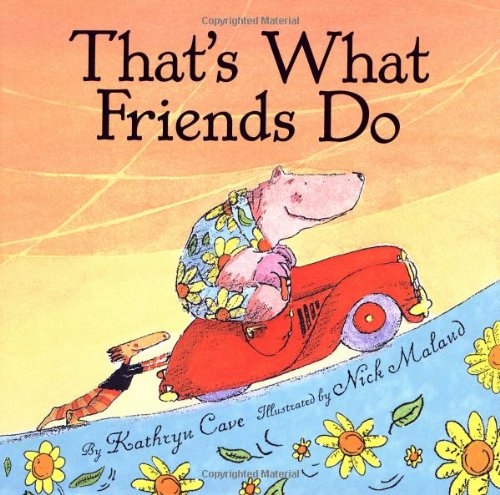
The five stages of friendship - a handy guide to making story friendships


Image result for Friends Kathryn cave nick maland


When I was working in Foundation and KS1, the friendships I saw in these tiny children came and went like clouds in a Summer sky. TRUE STORY: Two boys who had known each other for all of five minutes and were best friends in the morning, came wailing up to me in the afternoon, accusing each other of 'being horrible' and 'I hate you now'. They both stood there, their lips stuck out and wobbling until one of them burst into tears and said, "my Mum's going to tell off your Mum". The other boy copied him and said it back. I must have said something placatory but I might as well not bothered because nano-seconds later, they were hugging each other and inviting each other for tea.
My point is that they went through the stages of friendship in a kind of condensed version. And came out the other side. It was intense. Friendship can be intense. Age is important of course but should not define the length or depth of a friendship. Some friendships last, others not. I thought it would be interesting to take a look at those stages and see if they could help to give a deeper meaning to children's stories about friendship.

Stage 1. Strangers - I don't know who you are


I've heard some people say, "Strangers are just friends you don't know". Apart from the fact that that sentence sounds like a horrible saccharin cliche, I want to shout, "OF COURSE - how else do you start off getting to know someone; if not by not knowing someone?" It is of course a jumping off point for story.

You have to think about why you want your protagonist to get to know a stranger. Maybe it's a choice they make because this stranger is physically attractive; maybe they're forced into talking to a stranger by well-meaning relatons - "here's a child, you're a child, off you go and make friends!" or maybe your protagonist might find themselves dropped into a situation where getting to know a stranger is a matter of school survival/actual survival and in any number of situations.

“Just follow me and run like your life depends on it. Because it does.”


― James Dashner, The Maze Runner
The sort of friendship your protagonist will go on to make is dependent on a number of things but to begin with it's first impressions. These can make or break a potential friendship. Or conversely can be the beginning of deadly enmity. Pick them with care.

Stage 2. Acquaintance - I know of you

Maybe it's someone your protagonist bumps into occasionally at a club, at school, they live on the same road, a friend of a friend. Thus far there's been no reason to get to know them better until someone forces them together or engineers a meeting or there's a chance encounter as for example in Jonathan Stroud's , The Last Siege, when on the snowy slopes of a castle moat, three lonely teenagers, Emily, Sion and Marcus spend a nightmarish night which forges and then breaks friendships.
Image result for the last siege jonathan stroud
Add caption

Stage 3. Casual friend - I know you

Now we start to become friends but things can still go wrong and a friendship can be scuppered at this stage before it has the chance to blossom. Casual friends are often the bit-part actors in stories; the red-jumper characters who can be disposed of without causing too much grief or just enough grief to make your protagonist change her mind about something important or follow another path or become the shared problem for your protagonist. They should serve a purpose.

Image result for There's a werewolf in my tent
You need a good friend when there are werewolves around
In Pamela Butchart's fantastic series about year 4 school buddies, there are a few casual friends who pop up outside of the core friendship group of Izzy and her friends. Gary Petrie who is annoying but a friend, turns out be Very Useful when it comes to solving the mystery in, There's a Werewolf in my Tent!

Stage 4. Close friend - I understand you. 

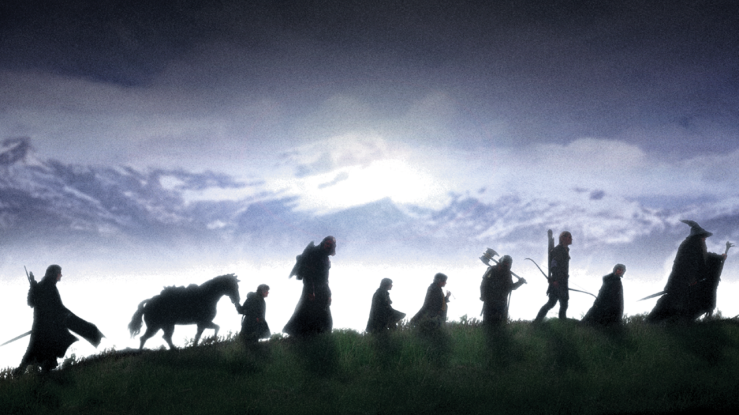
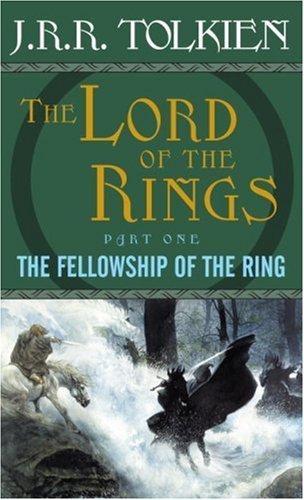
I have weathered the same circumstances as you and believe we have that in common. I believe what you tell me without too much questioning. This friendship is more difficult to break. I sometimes think it's like the 'being in a gang' kind of friendship, where you are bonded by shared difficulties and a shared purpose. Like, Just William and his gang, The Outlaws, who have constant problems with grown ups getting in the way of them having fun. What about Robin Hood and his Merry Men who must rob the rich to feed the poor and yet face constant danger from the Sherriff of Nottingham. In Tolkein's Fellowship of the Ring, friends band together to be rid of the Ring but must withstand death and danger.
Image result for the fellowship of the ring

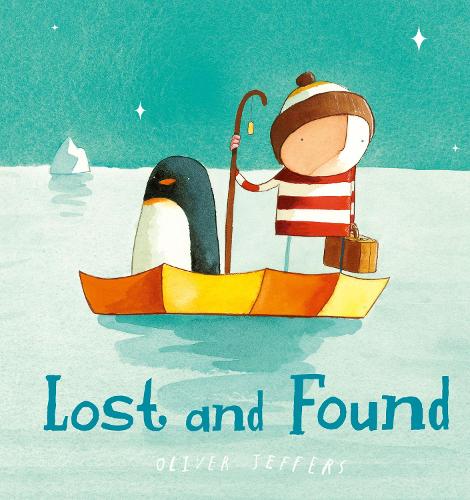
On a slightly lighter note, picture books have many friendships which reach this stage. The boy and the penguin in Oliver Jeffer's Lost and Found

Image result for oliver jeffers books
Give him a hug
Melrose and Croc - that wonderful friendship, created by Emma Chichester Clark.
Image result for melrose and croc find a smile
Good friends share bad times
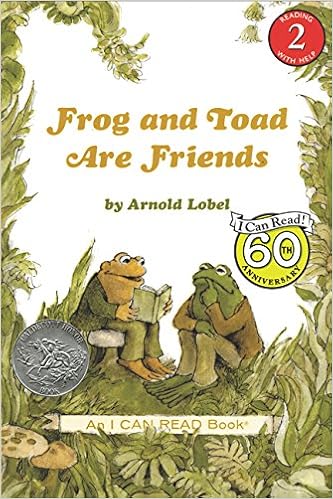
Frog and Toad by Arnold Lobel
Image result for frog and toad are friends

You might even argue that all of these friendships have gone beyond just close friends and moved on to the next stage ...

Stage 5. Soul friends


Image result for the fellowship of the ring book
Samwise Ganges and Frodo Baggins - soul friends

Samwise Ganges and Frodo Baggins begin as acquaintances, become close friends and finally through their shared weaknesses and strengths become soul friends.
This stage is attained over time, through shared experiences, and, most important, through vulnerability. It is through vulnerability that a friendship reaches this stage. At this level, one has shared their deepest secrets such as their biggest insecurities and their biggest fears. It is from this level of intimacy that friends become connected soul to soul, and they commit to the development of each other's character and as people. This is the stage where one is considered a true friend. The saying that embodies the spirit of this level of friendship is by Aristotle in which he states, "a friendship is one soul occupying two bodies." These individuals truly understand each other.

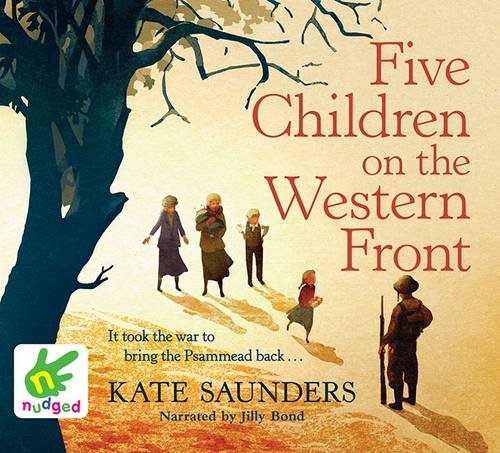
There are some fantastic books which reveal this most moving of the friendship stages. Harry Potter and his friendships with Hermione and Ron are tested to near destruction. Not to forget that soul friends may even be a different species e.g Five Childen and It On the Western Front by Kate Saunders - the cumudgeonly, psammead, a sand fairy who begins as a stranger and ends as a soul friend.

Image result for five children and it on the western front

Being a soul friends means that with so much gained there is more to lose. The highs are higher and the lows are lower.
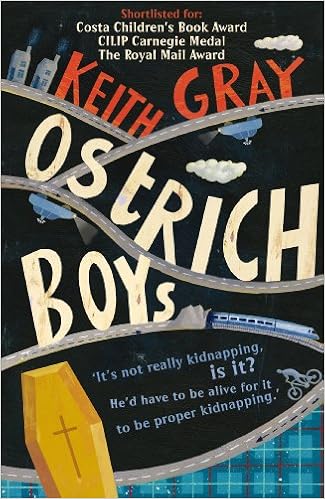
Image result for ostrich boys

One of my favourite books about YA friendship is Keith Gray's, Ostrich Boys. A bit from near the end sums it up for me; the incredible journey and lasting effects of going through so much and sharing weakness.

Kenny coughed, trying to mask that he was crying. 'I don't want him gone. He was my best friend. I want him here ... You know all the stuff we've been through? And it's all because of him. I'm telling you: we've got the best story ever. But he missed out. He's never gonna be able to tell it'. HIs shoulders shook and he wept. Ostrich Boys by Keith Gray

You could add a couple more stages (purely for the story!) - the break-up of a friendship and the making of an enemy. As a grown up, friendship can sometimes be tricky. I can involve compromise, understanding and negotiation and sometimes things are so tricky that it can be the end of a friendship.
The same feelings can apply to children and young people.

Beware jumping the stages. Too much, too soon and a friendship can shrivel and die. Then again, maybe you have a needy, manipulative, antagonist who does this ...  you can make an enemy.

How people make friends is a wonderful theme in our work. And like writing, friendship can be


difficult and tricky. It can come easily and blow away just as easily. You often have to work at it, share the good and the bad and the little bit boring. But the rewards are life enhancing.
Yes ... well, my best friend sent me this card. Nuff said.


Share buttons bottom

POPULAR!