Showing posts with label agents. Show all posts

Friday, 4 October 2019

Shopping for Comparisons - An Author and Agent Discuss Comp Titles

By Nick Cross and Heather Cashman


Nick says:
Hello! In what may be a dangerous experiment to test the limits of our professional relationship, I am joined for this blog post by my agent, Heather Cashman from Storm Literary Agency.

Heather says:
Thank you for including me in your post, Nick! I’m 98.2% sure we can survive this ;-)

When it comes to comp titles (as with many things in publishing), no-one seems to quite agree about what the name stands for. Some say comp means “comparison,” others say “comparative” or “competitive.” But whatever the name means, they can broadly be defined as follows:
Comp titles are existing books - published in the last five years - which you are comparing your own work against. Such comps are used throughout the publishing process, for pitching to agents, publishers, booksellers, and eventually to the book-buying public.

Just a quick note that this post is going to talk about fiction titles – the process for non-fiction is slightly different and may involve more detailed analysis of comp titles in your book proposal. There is also a difference in terminology between the UK and US. In the UK we talk about submitting to an agent, in the US it's called querying an agent. UK people write a covering letter to accompany a submission, whereas US folk write a query letter. For the sake of clarity (and because Heather is American), we’re going to use the US terminology in this post.

Heather and I have been working on comp titles for my illustrated YA novel Riot Boyyy, which is about to go on submission (look out for it, publishers!) This has been a complex process, and I must admit to not totally understanding comp titles in the past, or why they're important to publishing folk. I figure that if I didn't know, then there must be quite a few of you in the same boat!

Heather, can you tell us why comp titles are so useful for agents and publishers?

Sure! So, comparative titles are really useful for a lot of reasons. They began originally as part of an editor’s proposal package to their acquisitions board, which comprises other editors, the sales team, and the marketing team (usually). Editors use comparative titles to the manuscript they are trying to acquire, so that sales and marketing can do an appropriate analysis on how well they think the manuscript up for acquisitions is going to sell.

This type of pitch has trickled down from editors to agents and now to authors as they try to get their book noticed.

Comp titles can be useful in other ways as well. When used properly, they can give the agent a sense of the novel. For instance, perhaps something might have the paranormal aspects of The Raven Cycle by Maggie Stiefvater and the complex morality of The Sin Eater’s Daughter by Melinda Salisbury.

When I pitched Riot Boyyy for The Hook at the SCBWI British Isles conference last year, I summed it up as: “The Perks of Being a Wallflower meets Tom Gates at a feminist punk rock concert.” I thought that was pretty clever, but then I did some more research and ended up throwing away the analogy before I sent my submissions to US agents.

What were my reasons for this? Well, The Perks of Being a Wallflower is amazing, but also 20 years old, which doesn't make it a useful comp in the current market. The Tom Gates books are massive in the UK, but don't have the same kind of name recognition in the States.

Crowd photo by Magnus D

Heather, as you mentioned earlier, publishers use comp titles to set expectations for their internal teams and for external booksellers. They’re saying: this existing title sold in a certain way, so we expect this new title to do the same. As an agent pitching to a publisher, are you choosing comp titles for the same reasons?

Not necessarily. While it’s true that I want something to sell well, I’m also looking for a lot more than that. For me, comp titles are as much about setting, character, relationships, themes, influences, and also showing how the book is high concept.

Authors are a step earlier in the process, and they may be using comp titles as part of a query letter to an agent like you. What should they be thinking about when they choose a comp?

If an author is pitching me in a query letter, pitching on twitter, or talking to anyone about their book, comps are a great resource that can get the conversation going quickly and spark immediate interest. In that way, it’s less important if an author uses an older comp or uses movies or television for comparisons. However, if you use more current comp titles, it means to the agent that you’re aware of the current market trends, and that bodes well for the author/agent relationship. Agents appreciate when authors are knowledgeable about the business of publishing.

One caution though, if you’re writing in YA and you use something from twenty years ago, the YA reader of today might not have a clue what you’re talking about.

I located my very first email to you, and it turns out I didn’t quote any comp titles in my query letter. So omitting them is clearly no barrier to success! But could I have strengthened my pitch by including some?

Your book is unique and doesn’t have many comps, which is one of the reasons I loved it so much! That said, I’ve seen amazing comps and then jumped right down to the pages because they peaked my interest so well. So if you can use comparable titles, it can definitely strengthen your pitch.

Harry Potter covers by Scholastic and Bloomsbury

I can imagine that you get a lot of grandiose query letters from authors comparing themselves to Harry Potter or some other megabucks franchise. But what if authors comp themselves to a more niche title that you hadn’t previously heard of? Would you find that intriguing or off-putting?

I do find a lot big-name-$$ titles being comped, and honestly, there’s nothing that sets up an agent's expectations quite like that. It's a big promise you're making as an author. And because (so far) none of them have delivered on that promise of being just like those titles, it’s an even quicker pass.

If I’m not familiar with a comp title, I’ll just read the query. Then if I like the query concept, I’ll read the pages. If the pages stand up, I’ll look up the comp title and see that, oooh, it was published by Aladdin (or some other traditional publisher) and it sold really well and has 2,000 reviews with a 4.0 rating. Wow! I’m interested and would most likely request a full manuscript.

So for me, the main thing for comp titles would be to have a high number of reviews with a good rating from a traditional publishing house, even if it’s a smaller one.

You mentioned that authors querying you don’t always need to comp to books, and could use a TV show or movie if it seems like a better comparison. Can you expand on how that might work in practice?

If you have good comp titles with current books, use those in preference. However, I think TV or movies are fine for query letter comp titles. Not every agent feels the same way, but this is why they occasionally work for me. If it’s a timely show, the markets weave into one another. I also think movie/TV comps are good for giving a sense of the world, the relationships, perhaps a complex character arc, or a variety of other similarities that bring out some major aspect of your manuscript in a few words instead of a paragraph. For instance, if your main character has a negative arc, I might more quickly understand that if you compare him to Walter White (Breaking Bad).

Call that one the Heisenberg principle ;-) So, how long might you typically spend choosing comp titles when submitting a book to a publisher?

Hours. If it’s a highly-unique illustrated book about a certain feminist boy from Tacoma, many, many hours and three major rewrites of the submission letter.

Oops. Sorry about that!

No worries! ;-)

It usually only takes me a few hours, maybe four, to get amazing comparable titles for the books going out on submission. But comparable titles are so important, I’ll do whatever it takes until I get it right. They’re essential to a good letter to editors.

Finally, where do you go to find comp titles? Are you camped out in the children’s section of your local bookstore?

I love the bookstore! But in reality, I go to places where it’s easiest to find books. Publishers Marketplace is my first go-to. I look up books sold within the last few years. Once I have a list from there, I dig deeper by using Google or search Barnes & Noble or Amazon. What I love is that they often give you a whole list at the bottom of books similar to the one you’ve chosen. It’s like a “For fans of...” section. It might be a bit of a cheat, but it still takes a long time.

Heather, thank you so much. We’ve managed to get to the end of this blog post without either of us firing the other one, which has to count as a success!

Absolutely! I’m so happy you asked me to be on your blog. I hope this helped!

Heather Cashman is currently on the look-out for MG and YA submissions, so please send her all your good stuff! You can find her detailed wish list and submission guidelines at her Manuscript Wish List page. You can also find her on Twitter.


Nick Cross is a children's writer/illustrator and Undiscovered Voices winner. He received a SCBWI Magazine Merit Award, for his short story The Last Typewriter.
Nick is also the Blog Network Editor for SCBWI Words & Pictures magazine. His Blog Break column appears fortnightly on W&P.

Heather Cashman is an associate agent with Storm Literary Agency and is based in Kansas, USA.

Heather loves commercial fiction that has a literary flair and inclusive books that bring us together as citizens of the world.

Friday, 5 July 2019

Good News!

By Nick Cross

Image by freepik

I have SO much to write in this blog post - please do excuse me if it goes on a bit. But with that in mind, I won't make you read through the whole thing for the headline news. I (and my illustrated YA novel Riot Boyyy) have an agent! A real live agent, and not just someone who I have conversations with in my head. I’m delighted to introduce Heather Cashman.

Heather is an associate agent with Storm Literary Agency, living in Kansas (yes, in the US of A). Although she has only been a full-time agent since January, Heather is far from inexperienced. She’s been a professional editor for Cornerstones Literary Consultancy, interned at various agents and publishers, and is the former Managing Director of mentoring programme Pitch Wars. She’s also really nice (this is important, folks!)

Heather has a small list of clients at the moment, and that’s definitely a bonus for me - as an aspiring debut writer/illustrator I know that my career will need more attention than someone who’s better established. We also have the infrastructure of an established agency to back us up.

Five years ago, I wouldn't have considered looking for a US agent. Now that I've signed with one, the whole process seems very straightforward. All of the tools for remote working (email, Skype, Dropbox) are there to assist us, and even the time difference isn't a big problem. Given that I have a full-time job, the fact that Heather is mostly online during my afternoon and evening is actually pretty convenient.


For the last 6 or 7 years, I’ve had a bottle of vintage champagne in a box. Every so often, I would slide open the box, look at it and then slide the box closed again. Because, you see, I was saving that champagne for something really special - signing with an agent. And yet despite my best efforts, year after year that didn’t happen. After a while, that champagne started to weigh me down, it became another reason to feel bad about myself, that I had somehow failed by not making the (seemingly) impossible happen.

Last weekend, I opened the bottle and my family toasted my success. But although the champagne tasted absolutely fine (in no way guaranteed after 7 years in the bottle) it wasn’t worth waiting that long for. I resolved in future to celebrate the smaller successes along with the larger ones, to ride the ups and downs of the writer’s life with equanimity.

And let me tell you, there have been plenty of ups and downs over the last few months. If you read my earlier post The Thrill of the Chase - My Quest for the Perfect Agent, you’ll know that I hadn’t initially intended to send out Riot Boyyy to agents at all. But when I did, I really went for it. Here are the stats:
  • Agents submitted to: 45
  • Rejections Received (to date): 28
  • Full Manuscript Reads: 4

Despite the large number of submissions, my process was actually highly selective. I leaned heavily on the Manuscript Wish List site, looking for agents who represented YA books as well as:
  • Representing illustrators/graphic novels
and/or
  • Looking for books about feminism

Pro tip: The Manuscript Wish List search can be a bit limited, so for better coverage you can use a Google site search. For instance, searching for “feminism” on manuscriptwishlist.com returns 10 results. But typing “feminism site:manuscriptwishlist.com” into Google returns 90 results!


I can’t honestly say that I looked at Heather’s profile on Manuscript Wish List and cried “She’s the one!” I remember that she looked kind from her photo (some agents’ photos are mildly terrifying), and that her interests aligned with mine. But honestly, I had also sent to lots of other agents who seemed perfect, to no avail. When you are a writer submitting to agents, you have to be careful where you spend your emotional energy, because it’s very easy to burn out - especially when you’re sending a lot of submissions. Of course, I’m an emotional person, so it’s hard for me to stay detached all the time. Although each individual rejection hurt less than it has in the past, there was a period at the beginning of March when I was receiving rejections every day. That was really tough.

I had some notable misses with agents. One rejected me after 42 minutes (with feedback to boot). I found another on Twitter #MSWL, asking for boys’ books set in the 1990s. I thought that one was a slam dunk, but I got rejected after just 5 hours. Both of these were evidence that my pitch was really working, encouraging agents to read my chapters as soon as they received them. I scored a hit with an agent who responded to my initial submission with effusive praise, after less than a day. With great excitement, I immediately sent my full manuscript, but the agent then proceeded to sit on it for five months. This was the very definition of a mixed message (though the message I finally took was that they were too busy to be my agent!)


When you are searching for representation, the whole process is partly one of judgement. The agent is judging whether your writing excites them and has market potential. They are also judging your pitch and your ability to be professional - are you the kind of person they can have a working relationship with? The same should be true of the writer, however much the temptation is to jump up and down waving a banner saying “Like me! Like me!” Signing with an agent is not something to be entered into lightly (believe me, I have history with this), so I unavoidably found myself assessing Heather’s potential to represent me. After I sent her the full manuscript, she replied saying that it would take her three months to read it. Fair enough, I thought - it was good to have a timescale. When she replied a week and a half later, I knew I might be onto something. But then she did something really smart - she asked me to put together a document containing extracts of four to six other projects that I had written. She wanted to look beyond the book that I was submitting, to other potential projects that we might work on.

What an opportunity! Like a lot of unpublished writers, I have a bulging bottom drawer full of projects that never quite made it to market. It was honestly such a delight that someone wanted to read all this stuff, the words that I thought might remain undiscovered forever.

Throughout this post, I’ve been talking more from the perspective of a writer than a writer/illustrator. And part of the reason for that is the way that the submission process is set up. Nine times out of ten, an agent will ask to see the words first and the illustrations later (if they ask at all). Perhaps for picture books this is different, but there doesn’t seem to be a clear way to submit older illustrated fiction.

So, right up to the point I had my first Skype call with Heather, I didn’t know if she wanted to represent me as a writer, or an illustrator, or what. I didn’t know, because I hadn’t dared to ask earlier in the process! I tentatively broached the subject of whether she would be pitching the novel as an illustrated book, and she said something like: “Of course I want to present this with your illustrations.” Cue a massive sigh of relief from me! Later, when I received the agency contract, I got very emotional when it said I would be represented as a writer/illustrator. This is an incredible milestone for me, and I truly I believe that the authentic voice of Riot Boyyy comes from the synthesis of words, pictures and presentation.

OK, I need to stop now, before this blog post ends up being longer than the novel it’s celebrating. But I can’t end without a quick round of thank yous:
  • To Heather and the team at Storm Literary for their belief in me
  • To the Notes from the Slushpile crew, for their moral support through difficult times
  • To Sara O'Connor, whose enthusiasm for Riot Boyyy was instrumental in me deciding to approach agents rather than self-publish
  • To Terri Trimble, my "authenticity consultant" who read the whole novel and corrected my slip-ups in language and setting
  • And to all the Scoobies who cheered me on at The Hook. As ever, you rock!

Honestly, I'm still pinching myself about this. But if you go to the Storm Literary website, you can see my author profile, so it must be true!

Nick.


Nick Cross is a children's writer/illustrator and Undiscovered Voices winner. He received a SCBWI Magazine Merit Award, for his short story The Last Typewriter.
Nick is also the Blog Network Editor for SCBWI Words & Pictures magazine. His Blog Break column appears fortnightly on W&P.

Friday, 22 March 2019

The Thrill of the Chase - My Quest for the Perfect Agent

By Nick Cross

All photos of Banta the dog and his frisbee by Tom Ek

I’m only in the first sentence of this post, and already I’m not sure about the word “perfect” in that headline. In fact, I’m quite sure there is no such thing as the perfect agent - they are all human beings like us writers, each with their own strengths and weaknesses. But all I know is that my previous experience of having an agent was very unhappy, and I’m not keen to repeat that!

Of course, I may not get much choice in the matter. As I’ve discovered over the last ten years, you can be friends with any number of agents, but that doesn’t mean they'll want to represent you. In fact, what it mostly guarantees is that they’ll reject you promptly with a kind email and words of encouragement. All of which is much nicer than the alternative, but hardly the way to build a writing career...

So, what to do? It can be a bittersweet feeling to watch your friends achieving success, as most of the Slushpile team have. There have been multiple book deals, awards and all sorts of other good stuff since I first met these talented folks a decade ago. I’m proud of their success and proud to cheer them on. But I can’t escape the feeling that I’m still stuck on the starting blocks, the perennial “nearly there” author.

Enough feeling maudlin. Where is the “thrill” mentioned in the post title? Well, it’s something that’s surprised me about the submissions process for my illustrated YA novel RIOT BOYYY. Six books in, you’d think I’d be well and truly fed up of submitting by now, just going through the motions. But new thinking and new technology have made the process unexpectedly exciting this time around.


The source of my joy is those three little words. No, not those words, I'm talking about Manuscript Wish List. Using the hashtag #MSWL, agents regularly tweet about what kind of books they are looking for right now. Armed with that information, you can quickly craft a submission and get it in their inbox double quick, before someone else inevitably comes up with the same book you’ve already written. Even better than #MSWL is the accompanying website www.manuscriptwishlist.com. As well as linking to #MSWL tweets, this site hosts pages that agents can update with their preferences. It’s searchable by age group and genre, which removes almost all of the guesswork when selecting agents.

The vast majority of agents on Manuscript Wish List are American, but that’s fine because I’m targeting the US market for my book. Aside from the huge number of agents who accept YA fiction, submitting to US agents has other advantages. They are mostly working when I’m not, which means that if I avoid my email from mid-afternoon, I only have to worry about finding rejections in my inbox when I wake up in the morning. Of course, a rejection first thing is not the greatest start to the day! But is there any good time to receive one?


The buzz that comes from using Manuscript Wish List can be addictive. I was browsing Twitter one Friday lunchtime when I spotted an agent who was requesting exactly what I’d written. I sent the manuscript then and there, which took me a while because the agent had some unusually complex submission requirements. But once I pressed Send I didn’t care - this was so exciting!

My dreams of publishing glory crashed and burned the next day when the same agent rejected me. On a Saturday! Like some other responses I’ve received, this rejection praised the book’s concept, but was less enamoured of the way it was written. This sucks, but I guess it’s something I’ll have to live with. I’ve been writing for long enough (15 years!) to know I’m not suddenly going to develop a luminous, poetic writing style where every sentence sparkles like a rare gem. More than that, though, this is the right voice for the book I’ve written. And if you can’t see that, then I guess you’re not the right agent for me.

Submitting to agents (or “querying” as the Americans call it) can sometimes feel like a full-time job. Even with the help of Manuscript Wish List, you have to search for agents, check them out on Twitter, read their submission guidelines, tailor your covering letter, check everything twice and make sure you send only what they ask for. This takes me a minimum of thirty minutes per submission, and often longer (I estimate I’ve spent upwards of 30 hours on submissions of this book so far). The Twitter part is an essential stage BTW, because agents are constantly changing agencies or closing their submissions list. Plus, if their tweets look really crazy, you can swiftly walk away, whistling!

Another technological innovation I’ve encountered is the use of a system called QueryManager to manage submissions. Instead of sending an email, this requires you to submit via a web form, uploading attachments as necessary. This feels like a faff, but once you finish you get a URL back that you can use to check the status of your submission at any time. No more worrying about whether your email (or an agent’s enthusiastic reply) fell off the back of internet, or agonising over whether you spelt their name right in your covering letter.


The use of QueryManager opens up the possibility of asking for more information beyond the basic covering letter, sample and synopsis. Prompts such as “Describe the intended audience for your book” or even “Who is your favourite Harry Potter character?” At their best, such questions can make you think more deeply about the commercial appeal of your work. At their worst, they risk making the submissions process ever more time-consuming and labyrinthine, like some sadistic game.

Talking of sadistic games, I almost joined a mass Twitter pitch session earlier this month, but chickened out at the last minute (I guess I'm not ready for that kind of excitement!) There were tens of thousands of tweets, it all seemed so public, and I lost confidence in my carefully-crafted paragraph because it didn’t seem to follow the rules that everyone else had internalised. In fact, the more I researched the rules for Twitter pitching, the more I began to doubt the pitch I’d been using for months. Should I be including a rhetorical question in my pitch? Was that why agents kept sending me form rejections? Are you going to stop reading this blog post if I keep using them here?

I quickly found myself in a doubt spiral, which feels a bit silly in retrospect because this was the same pitch I’d delivered in front of 200 people, and it seemed to go down pretty well! In the end, I resolved to change nothing and resumed sending out individually to agents. If I’ve learnt anything about my process over the years, it’s that when those doubts strike I need to hold firm and meddle with my novel as little as possible. The devil makes work for anxious writers.

My quest for the perfect agent continues, and it’s hard to say if I’m getting any closer at this point. At least I’m having a bloody good try. My fellow Slushie Kathryn Evans, so long a “nearly there” author, used to have the following as her status:
Waiting, waiting, waiting. Hoping, hoping, hoping.
What she said.

Nick.


Nick Cross is a children's writer/illustrator and Undiscovered Voices winner. He received a SCBWI Magazine Merit Award, for his short story The Last Typewriter.
Nick is also the Blog Network Editor for SCBWI Words & Pictures magazine. His Blog Break column appears fortnightly on W&P.

Sunday, 9 February 2014

Let them eat book tours: a new class system in publishing?

Last week I read agent Donald Maass's post in which he cheekily described a new class system that has emerged from the ongoing publishing revolution. I thought, Woah! That's going to upset a lot of people.


(Donald Maass is President of the Donald Maass Literary Agency. He was blogging on Writer Unboxed)

Here's how he described the class system:

Freight Class - 'Self-published authors and electronic micropresses ... While the means of production are easy and low-cost, the methods of marketing are costly either in terms of cash or time. Success is rare. The pleasure of being in control is offset by the frustration of “discoverability”. Online retailers are whimsical and ludicrously over-stocked, both barrier and open door. Lists, blogs, social sites and the like are plentiful but of only spotty help ... The real problem is that fiction at this level has trouble appealing widely to readers. It can sell when priced at $2.99, sometimes a bit more, often less.'

Coach Class - 'Decently-written literary fiction and nicely-crafted commercial fiction that achieves print publication but sells best at trade-paperback level ($14.99 or so), or discounted in e-book form. Coach Class novelists support each other yet find it difficult to gain a foothold with the public. So-called “marketing” by their publishers is disappointing and, truthfully, can only do so much. Traditional tours (when they happen) accomplish little, front of store incentives are costly, and online marketing sometimes seems to consist of the hope that Amazon will do a price promotion. Coach Class authors, however, are professionally edited and get goodies like nice covers, ARC’s, and plenty of blurbs. Plus, their books are in bookstores, a big boost in visibility.'

First Class - 'The cream class gets a double shot of extended life in bookstores, both in hardcover and later in paper. Their books can sell well at $25 and live long in trade paper. For First Class authors, success looks effortless. Goodies accrue easily. Recognition is instant and wide. Sub-rights sell. Awards happen. Insulated from economy shocks, authors of this class never seem to worry about the industry. In interviews they talk only about their art and process. They mentor. Lines are long at BEA booth signings and readers are fiercely loyal.'
The New Class System by Donald Maass in Writer Unboxed

Like many of the commenters on that post, I agreed with so much of what Donald said but my non-confrontational side stressed over how it was going to upset all the people who would feel slighted by being designated Coach and Freight Class (Clearly, I'm in Coach - it has ever been thus).

Donald describes himself as yes, one of the gatekeepers, but 'no worshipper of the old ways'. And I agreed with his assessment:

Traditional publishing always was cost-heavy and inefficient. It’s a wonder that it worked. But the new electronic “paradigm” is not the glorious revolution that true believers would like it to be.
The New Class System by Donald Maass in Writer Unboxed

He says the publishing world has evolved into a class system 'and like any class system there are winners, losers and opportunities.'

I invite Slushpile readers to stop reading this and read the entire post - which was enlightening as well as provocative. If it makes you mad, don't worry, the angry people got their say in the comments (including one self-published author who was turned down by Don and now claims to have made so much money she's quit her day job).

But don't get mad - if this is a snapshot of a world in revolution, then we ain't seen nothing yet.

The signs of revolution are everywhere - and I feel like I've had a front row seat:

  • My publisher Random House has combined with Penguin to become the BIGGEST publishing house in the world. It made me feel very small indeed.

  • My imprint David Fickling Books has gone independent.

  • I attended an agent event recently and whereas in previous years agents were usually sniffy about authors who self publish, the agents were eager and excited to see what indie authors had to offer. 

At the SCBWI conference in Winchester (UK) last year the collection of people I met made it absolutely clear to me that this is a world in a flux:
  • There was a self published author who had just signed up with a 'traditional' publisher, who despite her success expressed joy at finally being signed up.

  • There was an author-illustrator, multi-awarded over the past two decades, who was self publishing because publishers were no longer interested in her brand. Her decision appears to have been vindicated - she's been nominated for several national awards.

  • There were award-winning editors who left their day jobs and launched new in-demand editorial services.

  • There was the proprietor of one of the first editorial service companies, now finding itself in competition with these services led by name editors. The new competition didn't seem to worry her. She'd just launched her own publishing house


In his final comment, Donald made the following forecast. I reproduce it here in case you don't manage to scroll down that far:

As the strategies, costs and experience of the indie movement evolve, it will start to look more and more like traditional publishing, albeit more digital and online. Indie authors will become more dependent on third party services to do the collection of things that we call publishing. The true cost structure of independence will bring profitability down as more sophisticated competition heats things up.

Meanwhile, print publishers will learn new digital strategies and, slowly, be forced into–hear me now–paying higher digital royalties. Competition will make it necessary, and indeed it’s happening around the edges already. A more profitable picture for authors and better online strategies by “traditional” publishers will make that option newly attractive and its downsides less depressing.

The indie movement and the Big Five, I think, are both headed to the same place. Possibly they will converge, we’ll see. The sense of revolution and warring classes that we feel now isn’t natural and, ask me, exists because neither side of the industry has yet figured out the best way to publish in the 21st Century. When they do, they will look a lot alike.

One thing has never changed, though, and will never change: It’s authors and their terrific storytelling that get readers buying books, and nothing else.
Let me say that again in case you glazed over before the end:

One thing has never changed, though, and will never change: It’s authors and their terrific storytelling that get readers buying books, and nothing else.


My new teen novel, Shine, was published in September. Read this wonderful Guardian review.

You might also want to read:
The Invention of the Teenager
Social Media: Eight Things We Can Learn from Old Style Journalism


Saturday, 5 October 2013

Authors will have choices - thoughts on the morning after the Agents' Party

By Candy Gourlay

Last Thursday, I attended the Agents' Party, a yearly SCBWI event that I stopped attending when I got signed by my agent a few years ago.

The Agents' Party used to be the highlight of my year on the slushpile and I kind of missed being a part of it ... so I decided to go, if only for the social life.

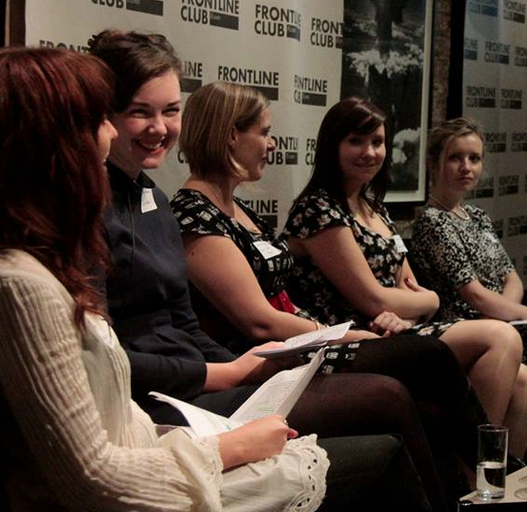
Left to right: Hannah Whitty of Plum Pudding, Emma Herdman of Curtis Brown, Hannah Shepherd of DHH Literary Agency, Vicki Le Feuvre of Darley Anderson, Sally Ann Sweeney of Mulcahey Associates.
The agents said all the things that one would expect  and that we on the Slushpile have heard so many times before -  to get an agent, WRITE A GREAT BOOK. If you're a Slushpile newbie and have never heard the agents say this in their many ways, do check out the Facebook photos - I typed up the little write-ups on the leaflet about what they're looking for in the captions.

(For your convenience - and because I couldn't resist the new Facebook feature - I've embedded the FB post about it at the end of this rumination)

Pressure to change

This is an interesting time for agents. I don't have to rehash how dramatically the publishing landscape has been changing - a metamorphosis that is fast, fickle and unpredictable.

The pressure means that to succeed, those lovely young agents sitting in a row have to be more creative, have sharper eyes for talent, and have bigger balls than most.

Hannah (left) and Emma in front of a rather startling photo at the Frontline Club venue.
Indeed, the first agent to speak, Hannah Whitty told the extraordinary story of how they saw so much promise in the character work of an illustrator that they persuaded her to author a series. Three books have been published and three more have been commissioned. (Hey Kate Pankhurst, good job!)

Emma Herdman described Curtis Brown's involvement in the "slightly scary" Discovery Day at Foyles - in which agents responded to excerpts and pitches from authors. The net is being cast wide, and the agents are doing more than just sitting at their desks watching their slushpiles grow.

I'm sure it's not just me - agents, editors, publishers - they all seem to be holding conferences, seminars, workshops for aspiring authors.  Now that the author has the power to cut gatekeepers out of the chain, there are changing perceptions about who is serving who.

Following the money


In the latest edition of The Author, the Society of Authors magazine for members, Nicholas Clee (Bookbrunch) describes how various agents are trying to follow the money.

Clee tells the story of how literary agent Ed Victor has become a publisher - his imprint Bedford Square Books published ebooks and print-on-demand "that without exception publishers have turned down".

It is Victor's rule to go to a publisher in every case and ask: 'Would you like to publish this wonderful book? If you don't, we will.' Publishers: the bigger the better? by Nicholas Clee, Autumn 2013 edition of The Author

Victor points out that the better deal for the author would be with Bedford Square (50 per cent of proceeds minus costs) than with the publisher (25 percent).

(Helpful note to aspiring children's authors: Sophie Hicks handles children's books at Ed Victor)

Clee also describes the approach of the agency Curtis Brown who pioneers in author assisted self-publishing. Here is something about author assisted self-publishing from the Jane Friedman blog:

With independent author success on the rise, the role of agents has taken a precarious turn for the unknown. Many agents are seeing fewer sales and lower advances (which equates to lower income), and are looking for ways to keep their heads above water. One path that some have taken is agent-assisted self-publishing. By Melissa Foster. Read the whole thing after you finish reading my blog

Curtis Brown MD Johnny Geller tells Clee: 'I don't describe us as a publisher' - but the Curtis Brown list can be regarded as 'a training ground or a showcase'. Plus: they have had the odd bestseller or two.

Under Amazon's White Glove service, Amazon gets 30 percent and authors get 70 per cent, paying the Curtis Brown the usual commissions. Editorial and marketing services are purchased from the Whitefox agency.

In his article, Clee writes:
Ed Victor and Jonny Geller both believe that their authors will choose to go with well-known imprints when the option is available; and these agents' deals enable their authors to take up alternative offers should they arise.
It's not SELF publishing anymore is it, when professionals are involved?

Clee ends his article declaring that whatever happens in the near future it looks like 'authors will have choices' - and the choices that belong to the traditional world ought to realize that soon.

Indie-publishing is here to stay

The usual questions were asked about self-publishing at the Agent's Party - and it was interesting to hear how positive the agents were ... in previous years, agents could be quite sniffy about authors who had already self-published their work.

I thought there was excellent advice to be had from this blog by Nicola Morgan on why publishers might not want to publish you once you've self-published your novel.

Self-publishing is a strategy. But there are different intended or desired goals. If the goal is becoming published by a publisher, then you need to understand how publishing works. And it doesn't work by republishing books that haven't sold squillions. Nicola Morgan blogging in Help! I Need a Publisher

At the same time of course, the minority who have succeeded in getting publishers to fall in love with their self-published work appear to have spectacular success.

Which brings me to the big news in the SCBWI world today. SCBWI HQ has just announced a new prize: the SPARK AWARD - recognizing excellence in a children's book published via a non-traditional route. Read about it here.

It is time that SCBWI recognize that there are new models for publishing. The Spark Award is one way we can reward those authors and illustrators who are pursuing independent and self-publishing in a legitimate and high quality way. SCBWI Executive Director Lin Oliver and President Steve Mooser

So there you have it. Indie authors have joined the ranks of legitimate.

Which begs a question to this long term denizen of the slushpile: where does the slushpile belong in this unrecognizeable new world?


With big thanks to Michelle Newell who did a brilliant job organizing the Agents' Party. If you're reading this and wondering 'What in the world is SCBWI?' you can find out more about the organization here. Below is my Facebook album on the Agents' Party embedded - if you can't see it, you can view it here (you might have to be logged into FB).


Monday, 6 May 2013

Slushpile Chat: an Author and Agent Discuss the Art of Revision

Agent Jenny Savill (left) and author Sara Grant join Notes from the Slushpile to share a few tips on how to improve your manuscript and pitch your work to agents. Jenny is an agent at Andrew Nurnberg Associates Ltd and Sara is the author of Dark Parties.   

Sara: I used to hate to revise a manuscript.

The joy of writing came from that initial rush of telling myself the story. Once I’d written the story down once, I had a difficult time going back and figuring out how to make it better. Reading and re-reading a manuscript from start to finish might catch the typos, but this linear review doesn’t often significantly improve a story.

Sara's YA books (US covers)

I read a lot about revision and devised a system of reviewing my manuscript that looks at the big picture first and then by character and chapter, scene, paragraph, sentence and ultimately word by word. Revision can be a painful and endless process, but it’s necessary and incredibly rewarding.

Would you agree, Jenny? How many times do your writers typically revise their manuscripts with you and then with an editor?

Jenny: I agree, and the answer is: multiple times.

I will take on an author because I am excited by their writing. For me, it’s a strange combination of personal literary taste, instinct, commercial musings and, strongest of all, a conviction that here is a project that deserves to see the light of day – a story that needs to be shared with editors, a manuscript that deserves to become a book.

If I can visualise it on the shelf, I’m half way to phoning the author. Having taken the author on, I will work with them to get their manuscript to a point where it is submittable to editors. Sometimes this involves a lot of work, sometimes not so much, depending on the issues with the project when it arrives with me – all manuscripts have different things that need working on. It’s not unusual for an author to do several revisions with me, followed by tweaking.

On occasion, a manuscript can land in my Inbox where all the main elements of the novel are already working to a high degree. These projects will typically need only a couple of small revisions to get them ready for submission to editors.

Much as I enjoy working with authors, there are only so many hours in the day

Much as I enjoy working with authors, there are only so many hours in the day and this is of course the sort of manuscript I pray for..! So, before submitting to agents, writers need to do all they can to get their draft manuscript as ready as possible. You want your manuscript to knock an agent’s socks off, but if the agent is stumbling over spelling or typos, never mind plot inconsistencies or pacing problems, there’s obviously less chance of that happening.

 So, my advice is to learn how to revise your manuscript – speak to other authors, listen to editors - and find a way of doing it that works for you. Revisions don’t stop once you have an agent – and they carry on once you have an editor. They are a necessary on-going process.


Sara: It’s good to know that I’m not alone with multiple revisions. You will probably recall that I received nine, single-spaced revision notes from my US editor on the first round of edits for Dark Parties. (And I learned from her blog that she typically writes up to twelve pages of notes to writers the first time around.) Published authors don’t often talk about this exhaustive revision process.

I supposed we’d like our readers to believe our novels come out perfectly formed. Oh, if that were only the case.

Sara's younger fiction 

It’s easy for writers to get pulled in a million different directions during revision. When I talk to other writers about revision – whether it’s one on one or during a workshop – one of the first things I ask them to consider is: What’s at the heart of their story? Why are they writing it and why are they the only person who can write it?

If you want to be published – as you’ve pointed out, Jenny, writing is collaboration with agents and editors. You have to know why you are writing your story and what’s important to you so that when agents or editors ask for changes – and they most certainly will – you know the heart of your story and you can remain true to that throughout the revision process. This clarity of purpose shines through the prose organically and subtly.

That’s one of my top tips for revision. What’s one of your top tips for writers?

Jenny: One of my top tips would be this. During the revision process your manuscript will change – sometimes in dramatic ways. You might find that if you write in the first person it brings the voice alive; that if you change the tense the story flows more easily; or that two very different narrators, rather than one, add tension and texture to a flat narrative.

Perhaps you need to flesh out the world of the story. Perhaps you need to rein it in. It might be that the manuscript stays basically the same structurally and changes only in more subtle ways, but one of the things that tends to happen is that old stuff from earlier drafts lingers in the latest draft.

So part of revising should be checking for stuff that no longer belongs in your manuscript and getting rid of it. This sounds easy enough, but when you’ve been looking at your story for months on end, it can be really hard to spot these things, and what you don’t want to do is end up deleting something that is actually working.

Part of revising should be checking for stuff that no longer belongs in your manuscript and getting rid of it

 So, take a break, do something else or write something completely different for a while. Give the manuscript to someone who hasn’t read it before to read and feedback on. Return to it with fresh eyes, at which point there is a checklist of things you can do to make sure it is working – and this is where Sara, armed with her highlighter pens (!), excels. Hers is a helpful, hands-on strategy to help authors revise methodically, without losing sight of the heart of their story, or the reasons they started to write it in the first place.

Sara: After you’ve polished your revision until it sparkles, the best piece of advice I can give writers is: GET AN AGENT!

I tell anyone who will listen how important it is to have an agent. On a personal level, writers need someone who can offer advice and critique. And from a business prospective, agents can market your work globally in a way that writers simply can’t. They know the market and business of publishing so writers can focus on their story.

I knew from our first meeting that Jenny was the agent for me. She understood Dark Parties and was genuinely interested in teen fiction. I wanted a partner in the process from brainstorming ideas to giving editorial feedback along the way. And Jenny has exceeded my expectations in every way imaginable.

So, Jenny, what are you looking for in a writer? Any do’s and don’t’s for people who are submitting to you?

Jenny: *blushes* I look for a good understanding in the writer of who they are writing for, what they are writing and why they are writing it. A sense of humour is always good. Not only does it make working with an author fun, it helps us through the tricky patches. The willingness to receive feedback in the spirit in which it is given and to work really, really hard at revising, going forward.

In the writing, I want to feel from the first page that the writer is in control of the story and that I, the reader, am in safe hands. I love being surprised - by an original voice, a character who confounds the reader’s expectations, a plot that doesn’t go where you think it will, brave use of language or structure, an unusual setting.

Make me laugh. Make me cry. Give me a stunning and satisfying ending

The thing that children’s books often do so much better than adult books is to give the reader a fresh and insightful take on the familiar- so I will be looking out for this. Make me laugh. Make me cry. Give me a stunning and satisfying ending, even if there is to be a sequel.

Sara: Speaking of satisfying endings, I think we should wrap up for now.

My final advice is READ! READ! READ! Read the genre and age range similar to the book you are writing. Read the books you wished you’d written. Read the classics but also what’s new on bookshelves.

Dissect the stories you adore and determine how the author made you fall in love with his/her book.

Also buy the book. Support your fellow writers and the industry you want to join.

Best of luck with crafting and editing and revising you novels!

Sara and Jenny have teamed up to offer a day-long workshop on 15th June and again on 2nd November to help writers polish their manuscript and make it stand out from the slushpile.

Share buttons bottom

POPULAR!