Showing posts with label Getting an Agent. Show all posts

Friday, 22 March 2019

The Thrill of the Chase - My Quest for the Perfect Agent

By Nick Cross

All photos of Banta the dog and his frisbee by Tom Ek

I’m only in the first sentence of this post, and already I’m not sure about the word “perfect” in that headline. In fact, I’m quite sure there is no such thing as the perfect agent - they are all human beings like us writers, each with their own strengths and weaknesses. But all I know is that my previous experience of having an agent was very unhappy, and I’m not keen to repeat that!

Of course, I may not get much choice in the matter. As I’ve discovered over the last ten years, you can be friends with any number of agents, but that doesn’t mean they'll want to represent you. In fact, what it mostly guarantees is that they’ll reject you promptly with a kind email and words of encouragement. All of which is much nicer than the alternative, but hardly the way to build a writing career...

So, what to do? It can be a bittersweet feeling to watch your friends achieving success, as most of the Slushpile team have. There have been multiple book deals, awards and all sorts of other good stuff since I first met these talented folks a decade ago. I’m proud of their success and proud to cheer them on. But I can’t escape the feeling that I’m still stuck on the starting blocks, the perennial “nearly there” author.

Enough feeling maudlin. Where is the “thrill” mentioned in the post title? Well, it’s something that’s surprised me about the submissions process for my illustrated YA novel RIOT BOYYY. Six books in, you’d think I’d be well and truly fed up of submitting by now, just going through the motions. But new thinking and new technology have made the process unexpectedly exciting this time around.


The source of my joy is those three little words. No, not those words, I'm talking about Manuscript Wish List. Using the hashtag #MSWL, agents regularly tweet about what kind of books they are looking for right now. Armed with that information, you can quickly craft a submission and get it in their inbox double quick, before someone else inevitably comes up with the same book you’ve already written. Even better than #MSWL is the accompanying website www.manuscriptwishlist.com. As well as linking to #MSWL tweets, this site hosts pages that agents can update with their preferences. It’s searchable by age group and genre, which removes almost all of the guesswork when selecting agents.

The vast majority of agents on Manuscript Wish List are American, but that’s fine because I’m targeting the US market for my book. Aside from the huge number of agents who accept YA fiction, submitting to US agents has other advantages. They are mostly working when I’m not, which means that if I avoid my email from mid-afternoon, I only have to worry about finding rejections in my inbox when I wake up in the morning. Of course, a rejection first thing is not the greatest start to the day! But is there any good time to receive one?


The buzz that comes from using Manuscript Wish List can be addictive. I was browsing Twitter one Friday lunchtime when I spotted an agent who was requesting exactly what I’d written. I sent the manuscript then and there, which took me a while because the agent had some unusually complex submission requirements. But once I pressed Send I didn’t care - this was so exciting!

My dreams of publishing glory crashed and burned the next day when the same agent rejected me. On a Saturday! Like some other responses I’ve received, this rejection praised the book’s concept, but was less enamoured of the way it was written. This sucks, but I guess it’s something I’ll have to live with. I’ve been writing for long enough (15 years!) to know I’m not suddenly going to develop a luminous, poetic writing style where every sentence sparkles like a rare gem. More than that, though, this is the right voice for the book I’ve written. And if you can’t see that, then I guess you’re not the right agent for me.

Submitting to agents (or “querying” as the Americans call it) can sometimes feel like a full-time job. Even with the help of Manuscript Wish List, you have to search for agents, check them out on Twitter, read their submission guidelines, tailor your covering letter, check everything twice and make sure you send only what they ask for. This takes me a minimum of thirty minutes per submission, and often longer (I estimate I’ve spent upwards of 30 hours on submissions of this book so far). The Twitter part is an essential stage BTW, because agents are constantly changing agencies or closing their submissions list. Plus, if their tweets look really crazy, you can swiftly walk away, whistling!

Another technological innovation I’ve encountered is the use of a system called QueryManager to manage submissions. Instead of sending an email, this requires you to submit via a web form, uploading attachments as necessary. This feels like a faff, but once you finish you get a URL back that you can use to check the status of your submission at any time. No more worrying about whether your email (or an agent’s enthusiastic reply) fell off the back of internet, or agonising over whether you spelt their name right in your covering letter.


The use of QueryManager opens up the possibility of asking for more information beyond the basic covering letter, sample and synopsis. Prompts such as “Describe the intended audience for your book” or even “Who is your favourite Harry Potter character?” At their best, such questions can make you think more deeply about the commercial appeal of your work. At their worst, they risk making the submissions process ever more time-consuming and labyrinthine, like some sadistic game.

Talking of sadistic games, I almost joined a mass Twitter pitch session earlier this month, but chickened out at the last minute (I guess I'm not ready for that kind of excitement!) There were tens of thousands of tweets, it all seemed so public, and I lost confidence in my carefully-crafted paragraph because it didn’t seem to follow the rules that everyone else had internalised. In fact, the more I researched the rules for Twitter pitching, the more I began to doubt the pitch I’d been using for months. Should I be including a rhetorical question in my pitch? Was that why agents kept sending me form rejections? Are you going to stop reading this blog post if I keep using them here?

I quickly found myself in a doubt spiral, which feels a bit silly in retrospect because this was the same pitch I’d delivered in front of 200 people, and it seemed to go down pretty well! In the end, I resolved to change nothing and resumed sending out individually to agents. If I’ve learnt anything about my process over the years, it’s that when those doubts strike I need to hold firm and meddle with my novel as little as possible. The devil makes work for anxious writers.

My quest for the perfect agent continues, and it’s hard to say if I’m getting any closer at this point. At least I’m having a bloody good try. My fellow Slushie Kathryn Evans, so long a “nearly there” author, used to have the following as her status:
Waiting, waiting, waiting. Hoping, hoping, hoping.
What she said.

Nick.


Nick Cross is a children's writer/illustrator and Undiscovered Voices winner. He received a SCBWI Magazine Merit Award, for his short story The Last Typewriter.
Nick is also the Blog Network Editor for SCBWI Words & Pictures magazine. His Blog Break column appears fortnightly on W&P.

Saturday, 8 December 2018

What Next? Life After The Hook

By Nick Cross

Photo by Clare Helen Welsh

If you weren’t at the SCBWI British Isles conference last month, you might be asking yourself: “What is The Hook and why should I care about it?” Well, it’s a kind of X Factor/Dragon’s Den for children’s writers and illustrators. A bunch of attention-starved, approval-hungry lunatics stood onstage in front of four agents and 200 of their peers, and spent five minutes each pitching the hell out of their books. The whole crazy enterprise was ably coordinated by Zoë Cookson, with her presentational partner-in-crime Kate Mallinder.

Zoë and Kate

Anyway, I did it. I managed to get up on stage without falling over, kept pretty much to time and successfully synchronised my pitch with a complex animated slide deck. But (spoiler alert) I didn’t win - that honour fell to Catherine Whitmore and her excellent pitch for Too Big for Her Boots.

I could lie about it, but the truth is I was disappointed not to win. Desperately disappointed. I didn’t flounce off in a huff, but I did want to be alone in my defeat. I left the conference quietly and walked down the hill to central Winchester, the voice of my inner critic ringing in my ears.

I truly believe that these moments, the moments when we’re at our lowest ebb, are the ones where we really get to choose between winning and losing. I put in my headphones, put on my favourite music and by the time I was back at the hotel twenty minutes later I had a plan. Instead of sitting around my room, stewing in my own juices, I went out, got a coffee and spent the next hour doing some final edits to my book. That hour reminded me why my book is awesome and why my faith in it is well-placed. I got back on the horse.

No, no! That was a metaphor, you idiot!

The irony of doing something like The Hook, is that the five minutes when I was onstage pitching was genuinely the easiest part of the whole process. What the audience couldn’t see were the months of preparation that led up to that moment.

I first had the idea of entering The Hook back in February. I remember mentioning it in conversation at the Undiscovered Voices 2018 launch party, and again a couple of months later when I met Jan Carr (the original creator of The Hook) at a book launch. Jan cautioned me that even getting selected was tough, with the number of entrants increasing yearly. I took that information on board and began to evolve a plan about how I might deliver my pitch, sketching out ways to introduce the world of the novel. Even then, I knew that I wanted to do something ambitious with my slides, to maximise the visual opportunities afforded to me as a writer/illustrator.


In tandem, I was working on the book all through the year, writing and rewriting, designing and redesigning. Ideas for the novel and ideas for the pitch intertwined, in the same way that the writing and illustrating processes informed each other. I knew that the timing was right for me to be finished by November, or perhaps the deadline made sure that happened. Either way, I was itching to reveal the book to the world, but it seemed to be a long time before applications to The Hook opened.

Luckily, the previous year’s conference website was still live, so I was able to get all the entry details in advance. The length of the extract I needed to submit seemed incredibly short (600 words) and when I looked at my large format illustrated layouts I realised that would be less than three pages of content. So I made a smaller format (A5) version with six pages, especially for The Hook.


I was so ready that once the competition opened, I submitted everything a month before the closing date! But I still had to wait as long as everyone else to find out if I’d made it through. I was pretty confident, but I also knew that if I didn’t get selected, I wouldn’t have to tell anyone about it. Of course, I was selected (by a super-secret panel of Scoobies) and pretty soon everyone knew about it!

After the months of planning, I had just two weeks to finalise my slides. In theory, I had a further week after that to hone my pitch, but in practice the two were so interlinked that my pitch needed to be ready at the same time. I’ve calculated that I spent about thirty hours making the slides, which is an insane amount of time for a five minute presentation. Although I endeavoured to reuse as many of the graphics and illustrations from the book as I could, there was probably 50% new material that I had to create. And let’s not even talk about trying to make the animations work in PowerPoint!

But we shouldn’t forget that no-one was forcing me do all this work. And indeed, the number of slides presented had absolutely no correlation with who won the competition. But these kinds of opportunities don’t come along very often, and I wanted to embrace this one. Despite the work involved, I really enjoyed creating the presentation because I was able to tell a story visually in a very different medium, a bit like making a short film.

Here I am mid-pitch (photo by Marie Basting)

OK, I seem to have spent a lot of time talking about the period leading up to The Hook, thereby completely ignoring the title of this post! What has happened since?

One immediate side effect was praise. This doesn’t sound like a bad thing, but I’ve always struggled with taking compliments. I tend to deflect them by diminishing myself in some way. I got a lot of compliments in the hours and days after The Hook, some of them from people for whom the theme of my novel had genuinely touched a chord. And I managed not to respond with something like: “Shame it wasn't good enough to win though.” I just said “Thanks.” And that, for me, was real progress!

The “final” edits I needed to do on the book turned out to be more extensive than I expected, which necessitated another two weeks of writing and proofing. In parallel, I worked on reformatting the layout of the book based on a design review I’d had before the conference (but hadn’t had the time or headspace to put into practice). At last, it was all ready to submit, but I suddenly realised I had no synopsis.

If you're a sensitive writer type, you may want to stop reading. Because I'm about to make a SHOCKING CONFESSION.


Are you sure?


Last chance.


OK, here goes...

I love writing synopses!

I know that goes against all that is good and holy, but there you have it. I find the synopsis far, far easier than writing the actual book. Part of this may be because, by the time I get to it, I’ve been over and over the book hundreds of times in my head. Anyway, I polished off the synopsis in my lunch hour - one page, 660 words, job done.

So, was I finally ready to submit? You might think that, but what I decided I really needed to do was make a book dummy. This was using the skills I had newly learnt at this year’s SCBWI conference, involving several hours of printing, gluing and sticking. As a displacement activity, it was a good one, and the end result looks pretty awesome. I especially liked writing the back cover blurb and seeing the book as a real object, which makes it so much more tangible than pixels on a screen.

With all that done, the inevitable couldn’t be avoided any longer. I have started submitting to agents, or as I like to think of it, putting my baby into an email-shaped spaceship and launching it into the cold dark void of indifference (you know, like Jor-El in Superman).

Superman and Superdad (photo by marakma)

If I sound a tad conflicted about the process, it's because trying to get an agent and publisher was never part of my plan for this book. Burned by my previous experiences with the industry, I resolved that this book would be just for me - entirely self-published and what did it matter if I only sold 50 copies? To that end, I turned away from the market and just wrote whatever the hell I wanted, in the way I wanted to do it. And yet, here I am, neurotically chasing approval all over again. What happened?

Well, for one thing, people really seem to be engaging with the concept of my book, and the way it’s presented. If everyone had shrugged at my pitch, I might have retreated into my burrow for six months and finished the book just for me. But suddenly, people want to see this thing published, and I feel some responsibility to make that happen. Plus, it fits with my new mantra of trying to embrace whatever opportunities come along.

So, I will roll the dice with some carefully selected agents, and in the meantime I’ll continue illustrating and preparing the book for self-publication. Unlike my novel, the future is unwritten.

Nick.


Nick Cross is a children's writer/illustrator and Undiscovered Voices winner. He received a SCBWI Magazine Merit Award, for his short story The Last Typewriter.
Nick is also the Blog Network Editor for SCBWI Words & Pictures magazine. His Blog Break column appears fortnightly on W&P.

Monday, 18 July 2016

On Being Edited by Maureen Lynas

I’m currently experiencing my first experience of being edited by an experienced editor (Agent Amber) and it has been an extremely interesting experience.


Note: Being edited is nothing like being critiqued.
Being edited has made my story
BIGGER, DEEPER, CLEARER, STRONGER AND FUNNIER. Thank you, Amber.

One big plus is that I now have insider knowledge on how publishers view school based stories. So I shall share one insight that had me hitting the research button.

Monday, 11 April 2016

Yay! Whoo Hoo! And Whoopy Do!

by Maureen Lynas Who is celebrating! 

I may be odd but I love going to the tip and on Friday our car was packed with bags of shredding, old computers and cardboard boxes. Tidy house! Hurrah! Geoff was ready and waiting, I was putting my boots on, and the phone rang. I nearly didn’t pick it up - the tip was awaiting! But I did. Right choice!  

Amber Caraveo from the Skylark Literary Agency was ringing with an offer of representation! We talked for an hour, we agreed our terms, we discussed editorial suggestions and happily said our cheerios. Amber went on to share the news with partner Joanna Moult and announce it on twitter. I went to the tip.

Then out for a celebratory lunch. I was a jumble of emotions as I tried to fill Geoff in on all the details. This has been a long time coming and it was a bit overwhelming. By the end of the weekend I realised there had been quite a few emotions at play.
Elation, relief, exhaustion, acceptance, fear and - determination
Elation - the whoopy doops, the yay’s, the yahoo’s, the twitter and facebook storm of congratulations and new friends. It’s exciting. A happy dance must be done. Prosecco must be drunk. Chocolate must be consumed. It was. By both.

Relief - JOB DONE! No more agent rejections, no more fingers crossed, no more searching and hoping that one day someone will ‘Get me’. Relief that Amber loves my work so much she’ll invest her time and effort into my career. Thank you!

Exhaustion - This has been a long journey! I once climbed a seemingly never ending mountain called Ingleborough, in Yorkshire. It had many false peaks and I was convinced that each rise was the top. That the torture would be soon be over. My writing journey has been similar. There’s been a number of false peaks and sometimes it’s been difficult to get back up from them. Songs have helped. Especially this one from Chumbawumba. 

Acceptance - This may take some time but I think using these words as often as possible should help - My agent. As in: When I was talking to my agent. My agent is lovely. My agent is going to be pitching soon.  My agent said… (I intend these sentence endings to be something wise and intuitive to show she is the best agent a writer can get.)  

Fear - Amber is going to pitch my book! It’s not ready! It’s not good enough! I have three pages of editorial suggestions. What if I can’t do it! What if I end up with a big mess of a muddle?

Determination - There’s been a lot of determination over the many years of writing and learning and hoping. Now it’s needed even more than before. Because getting an agent is a huge, wonderful step but it isn’t the end. The end is one of my books in a child’s hand and, hopefully, a lot of laughter.

Here's a song that says it all. Thanks Rod!

Now I'm off to come up with a plan of action for Witch School Sucks! Because MY AGENT is waiting. 

Maureen 

You can see the first half of how I got MY AGENT through the Slushpile Challenge on SCBWI BI's Words and Pictures

Monday, 6 July 2015

Stats from the Slushpile: A Decade of Dreaming

By Nick Cross

Hello again, slush fans. As anyone who's seen my Museum of Me series will attest, I like to keep hold of stuff from my past and inflict it upon share it with my loyal readers. Now that I've been writing seriously for a decade (actually slightly more, but 10 & 3/4 years didn't sound as good) it felt like time to take stock of my journey so far.
And what a journey it hasn't been. Well, not in the way I expected when I started out. For much of the time, I was driven by the conviction that my current book would soon be published, and I'd be on my way to fame and fortune. I was desperate but not entirely deluded, and got damn close on several occasions. Yet, my route to actual publication (and a smidgeon of critical acclaim) has come via a magazine, which wasn't a medium I'd even considered when starting out.

In writing this blog post, I also realised how many unresolved "issues" I have with the publishing industry and my position within it as an author (my position as an employee is thankfully much more settled). I thought this would be an easier post to write than my piece on stepping outside your comfort zone, but it was much, much harder. The reality of being on the slushpile is something that confronts all of us in the modern publishing world, where books go in and out of print constantly. It's a harsh environment, with sudden, glorious highs and some sickening lows that make you want to jack it all in and do something sensible with your life.

And yet, I'm still here, still writing and contemplating yet another jump into the world of submissions, false hope and form rejections. So, in tribute to that heroic and inadvisable urge, I present some infographics to chart each book from my decade of dreaming:


(Click images to enlarge)

The New Janice Powley was my first attempt at a novel and (so far) my only YA. I didn't know much about writing a book, so I just sort of wrote scenes as they came into my head, hoping to stitch them together later. This turned out to be a considerable job, as when I started to type up my hand-written first draft, I discovered I'd written more than 140,000 words! Over many months, with the help of a friend who was a trainee editor, I whittled it down to 80,000 and (mostly) got it to make sense.

In hindsight, getting two full manuscript reads of a book that, nowadays, would be little more than 99p Kindle fodder was an amazing achievement. But of course, I didn't see it like that - I wanted to be published, dammit!


Back from the Dead (a zombie horror comedy) was my golden ticket - the book that was going to get me out of obscurity and onto the bestseller lists, allowing me to give up my job (which at the time I hated) and settle into life as a full-time writer. Clearly, none of those things happened, and there's a part of me that still blames myself for blowing my big chance (however unwarranted that criticism is).

After I won a place in Undiscovered Voices 2010, a lot of things happened in quick succession: I got an agent! I rewrote 80% of the book! I got a publisher interested! I rewrote half the book again! I became clinically depressed from all the stress and expectation I was piling upon myself! I had the worst year of my life!

Be careful what you wish for.


The zombies had died a death, but my agent wanted us to strike again while the iron was hot. Even though I was still horribly messed-up and depressed-down, I launched into a new children's novel. The setting for Die Laughing - a world in which no-one could laugh or be happy, for fear of sudden, violent death - closely mirrored my daily life, where I had become gripped by the fear that I was about to die (a common symptom of depression, apparently). Thus, Die Laughing became my magnum opus and possibly the last book I would ever write.

To be fair to my agent, I'm not sure how much of my mental state was visible in my emails to her, as I apologised at monthly intervals for missing my deadlines for delivery of the first draft. The irony being that, when I finally did finish it, she took her own sweet time to decide that she hated it and would not represent it unless I made significant (and in my opinion disastrous) changes.

Feeling confused and betrayed, I terminated our arrangement, wrote another draft on my own terms and sent it out to some editors who'd expressed an interest. But my confidence in the book had long departed.


SuperNewman and MegaBeth (a riot of slapstick superhero silliness with a bittersweet subtext about mental illness) marked the point where I got serious again. No more would I be weighed down by the fear of rejection - this book was going out to as many people as possible. But I didn't want to just go through the Writers' and Artists' Yearbook and send blanket queries to everyone, no matter how inappropriate - I would select the recipients carefully and tailor the submissions. As anyone who's done this knows, it's a lot of work! I also kept ever more detailed statistics, which you can see reflected in the infographic.

The average time taken to reply to an initial submission works out at 5.4 weeks, which was less than I'd imagined. Actually, most agents replied within a month, and there were just a couple who took a really long time, which dragged down the averages.

The rewrite story looks very similar to the one I experienced on Back from the Dead, but it wasn't really. Yes, the book still got rejected at the end of it, but unlike the fear and loathing last time, reworking SuperNewman and MegaBeth was one of the best writing experiences of my life. In just six weeks I took the book down from 45,000 to 15,000 words, replacing one of the main characters and keeping only the most awesome parts of the original story. There was something very freeing about that.

* * *

Consider all this, then, as an exorcism of the last ten years - the blog post I had to write before I could finally move on. The past is long gone and the future again twinkles with hope and expectation. Meanwhile, in the present, I'm taking every step to make sure my latest book doesn't disappear without a fight. A decade on from when I started, the options available to me as an author have increased dramatically, and there are all sorts of alternative funding and publishing methods available if the traditional gatekeepers aren't interested. It's time to stop dreaming and take my fate into my own hands.

Nick.


Nick Cross is a children's writer, Undiscovered Voices winner and Blog Network Editor for SCBWI Words & Pictures Magazine.
Nick's writing is published in Stew Magazine, and he's recently received the SCBWI Magazine Merit Award, for his short story The Last Typewriter.

Friday, 1 November 2013

Ten Top Tips to Finding an Agent - Benjamin Scott's Guest Blog

by Addy Farmer

Benjamin is the Writing for Young Adults online course tutor for Oxford University Continuing Education Department. He teaches creative writing to a range of groups, schools and organisations. As well as pursuing his own writing, he is lead author on the Star Fighters series written under Max Chase for Working Partners. He runs his own private critique and editing service and is honoured to be one of the four editors for this year’s Undiscovered Voices. Website and Twitter: www.benjaminscott.net and @Benjamin_Scott

Having just signed with my agent, Gillie Russell at Aitken Alexander, I’m delighted to share with you 10 tips to help you with your agent search. I can’t promise to make it faster, but there are several things you can do to make it easier to find that agent willing to champion you and your work. My own achievement on taking my writing journey that bit further is still sinking in, but it’s a delight to know that I’m now sharing the next stage with my agent.
1). Join SCBWI. As a former ARA, I bet you think I might be biased, but the truth is I wouldn't have come this far without the support of some great friends, making some brilliant contacts and having access to amazing advice which being a SCBWI member brings.

2). Get involved. It’s not just a matter of joining and hoping good things will come to you. I say this as someone who lives over two hours from London and gets back after midnight from any evening event in the capital. Grab as many chances as you can to meet people and participate as much as possible.
It’s true, the more you put in, the more you get out.

3). Welcome friends who will encourage you to push your work further. I’ve been blessed to find some great critique partners. If you’re really lucky, they’ll hold off telling you to send it out until they genuinely believe your work is ready and then give you a massive shove to send it out. I’m a huge rewriter and it helped to have someone say it’s time I sent it out and stopped avoiding the submissions process.

4). Live in the moment. Celebrate all concrete achievements. Don’t worry about things you have yet to achieve or problems that don’t exist. Creative people can be easily distracted by the shiny baubles of the future, but grasp onto the future too tightly and those glass baubles can break and hurt. A question I try to live by is “What if this is it?” What if today, this hour, this minute is it? Am I going to appreciate and love this moment? Am I going to be grateful for my achievements however modest or am I going to feel bad because I haven’t won a Carnegie yet? What a thrill to have at least tried and got this far. I have no guarantee that I’ll get any further in publishing than this (although I plan and hope to do more - much more) but if this is it for me then I want to go to sleep with a smile on my face and have sweet dreams. I want to write without worrying about the future.

More friends on a journey
5). Remember, it’s a numbers game. In a book on job hunting I co-wrote years ago, we made the point that applying for jobs is a numbers game. The fewer jobs you apply for, the lower your relative chances of being hired. The more companies that know you’re looking for work the higher the chance one of them will take you on. Publishing is a numbers game too. It comes down to luck and subjective evaluation.
Even if your book is a perfect bestseller-in-the-making just as it is, the more people you offer it to, the higher the chances someone will say yes.
6). Write more than one book (but not in the same series). I’ve stolen this advice from Sara O’Connor who told a SCBWI Masterclass that the only way to double your chances of selling work to an agent or editor is to write another book – on a different topic. I was pitching a 7+ series called Eureka Evans: A Disaster Waiting to Be Discovered, but I had a YA fantasy up my sleeve called The Summoning of Freiya Rolandson. My query letter only mentioned Freiya in passing, but my agent was keen to look at both projects. Two different books make two different opportunities – you double your chances.

7). Delete the R-Word from your vocabulary. I’m serious. Promise never to use the word Rejection again. You’d think as people who take care with words we’d find a better way to describe the phenomenon of an agent/editor deciding not to devote their time, energy and emotions/money to the book we sent them. The R-Word comes with too many connotations. As much as I can see the analogy between publishing and dating, rejection is not an easy word to feel neutral about, let alone positive. It’s also too personal. A pass from a gatekeeper is about the text and them, not about us as writers/people and them. Instead, I offer you the more neutral suggestion of a project simply being ‘passed on’ – that’s all it is. It simply wasn’t a fit this time around.
sometimes the fault lies with the stars
8). What was that about feeling positive about being passed on? Impossible, right? Like duelling scars in Bismark’s Prussia, I regard each pass is a BADGE OF HONOUR. It’s a rite of passage. Let’s face it, few, if any, writers get away without a single agent or editor passing on one of their books at some point. If it was all right for J.K. Rowling or William Golding to have had work turned down then I see it as a personal Badges of Honour to have at least had the courage to send my best work out and see how it fared. Somewhere inscribed on these imaginary badges are the words Perseverance vincit (Perseverance conquers). Each Badge of Honour is a personal invite to try again as Samuel Beckett wrote: “Ever tried. Ever failed. No matter. Try Again. Fail again. Fail better.”

J.K. never gave up on Harry


9). Stagger your submissions and plan for the long haul. This is just practical planning really. Draw up a list of all the agents who represent the work you’re sending out and draw up a list of potential editors too. As an agent advised at a SCBWI Agent’s Party a while back, if you apply to editors and they all pass on your project then there’s nothing an agent can do for you – the well of opportunity is dry. However, if all the agents pass on your book then there’s a whole load of editors to approach.
I found the way that worked best for me was to send out one query a week (and therefore hopefully one submission a week) to ensure no matter whom passed on my work I knew what to do next: just follow the plan.

10). Send a query first and start a dialogue before you send a submission. I like to know that I’ve got the right email address and that the agent has some sense of me and my project before they receive a manuscript or sample. Time is hugely precious and an informative and to the point query often gets a quick response that a submission. It goes without saying always be polite and always be patient.


Thanks so much, Benjamin! This is such good advice from someone who knows. 

Saturday, 5 October 2013

Authors will have choices - thoughts on the morning after the Agents' Party

By Candy Gourlay

Last Thursday, I attended the Agents' Party, a yearly SCBWI event that I stopped attending when I got signed by my agent a few years ago.

The Agents' Party used to be the highlight of my year on the slushpile and I kind of missed being a part of it ... so I decided to go, if only for the social life.

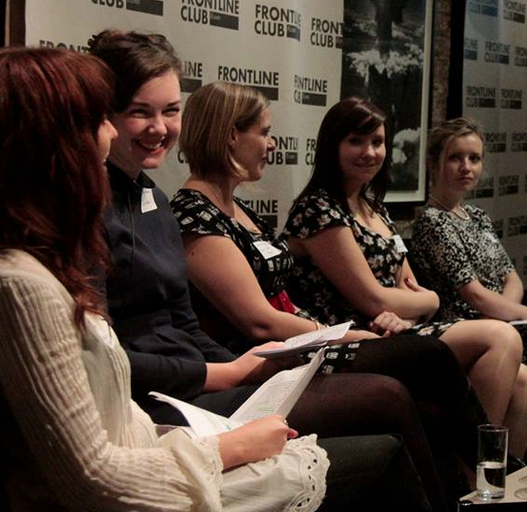
Left to right: Hannah Whitty of Plum Pudding, Emma Herdman of Curtis Brown, Hannah Shepherd of DHH Literary Agency, Vicki Le Feuvre of Darley Anderson, Sally Ann Sweeney of Mulcahey Associates.
The agents said all the things that one would expect  and that we on the Slushpile have heard so many times before -  to get an agent, WRITE A GREAT BOOK. If you're a Slushpile newbie and have never heard the agents say this in their many ways, do check out the Facebook photos - I typed up the little write-ups on the leaflet about what they're looking for in the captions.

(For your convenience - and because I couldn't resist the new Facebook feature - I've embedded the FB post about it at the end of this rumination)

Pressure to change

This is an interesting time for agents. I don't have to rehash how dramatically the publishing landscape has been changing - a metamorphosis that is fast, fickle and unpredictable.

The pressure means that to succeed, those lovely young agents sitting in a row have to be more creative, have sharper eyes for talent, and have bigger balls than most.

Hannah (left) and Emma in front of a rather startling photo at the Frontline Club venue.
Indeed, the first agent to speak, Hannah Whitty told the extraordinary story of how they saw so much promise in the character work of an illustrator that they persuaded her to author a series. Three books have been published and three more have been commissioned. (Hey Kate Pankhurst, good job!)

Emma Herdman described Curtis Brown's involvement in the "slightly scary" Discovery Day at Foyles - in which agents responded to excerpts and pitches from authors. The net is being cast wide, and the agents are doing more than just sitting at their desks watching their slushpiles grow.

I'm sure it's not just me - agents, editors, publishers - they all seem to be holding conferences, seminars, workshops for aspiring authors.  Now that the author has the power to cut gatekeepers out of the chain, there are changing perceptions about who is serving who.

Following the money


In the latest edition of The Author, the Society of Authors magazine for members, Nicholas Clee (Bookbrunch) describes how various agents are trying to follow the money.

Clee tells the story of how literary agent Ed Victor has become a publisher - his imprint Bedford Square Books published ebooks and print-on-demand "that without exception publishers have turned down".

It is Victor's rule to go to a publisher in every case and ask: 'Would you like to publish this wonderful book? If you don't, we will.' Publishers: the bigger the better? by Nicholas Clee, Autumn 2013 edition of The Author

Victor points out that the better deal for the author would be with Bedford Square (50 per cent of proceeds minus costs) than with the publisher (25 percent).

(Helpful note to aspiring children's authors: Sophie Hicks handles children's books at Ed Victor)

Clee also describes the approach of the agency Curtis Brown who pioneers in author assisted self-publishing. Here is something about author assisted self-publishing from the Jane Friedman blog:

With independent author success on the rise, the role of agents has taken a precarious turn for the unknown. Many agents are seeing fewer sales and lower advances (which equates to lower income), and are looking for ways to keep their heads above water. One path that some have taken is agent-assisted self-publishing. By Melissa Foster. Read the whole thing after you finish reading my blog

Curtis Brown MD Johnny Geller tells Clee: 'I don't describe us as a publisher' - but the Curtis Brown list can be regarded as 'a training ground or a showcase'. Plus: they have had the odd bestseller or two.

Under Amazon's White Glove service, Amazon gets 30 percent and authors get 70 per cent, paying the Curtis Brown the usual commissions. Editorial and marketing services are purchased from the Whitefox agency.

In his article, Clee writes:
Ed Victor and Jonny Geller both believe that their authors will choose to go with well-known imprints when the option is available; and these agents' deals enable their authors to take up alternative offers should they arise.
It's not SELF publishing anymore is it, when professionals are involved?

Clee ends his article declaring that whatever happens in the near future it looks like 'authors will have choices' - and the choices that belong to the traditional world ought to realize that soon.

Indie-publishing is here to stay

The usual questions were asked about self-publishing at the Agent's Party - and it was interesting to hear how positive the agents were ... in previous years, agents could be quite sniffy about authors who had already self-published their work.

I thought there was excellent advice to be had from this blog by Nicola Morgan on why publishers might not want to publish you once you've self-published your novel.

Self-publishing is a strategy. But there are different intended or desired goals. If the goal is becoming published by a publisher, then you need to understand how publishing works. And it doesn't work by republishing books that haven't sold squillions. Nicola Morgan blogging in Help! I Need a Publisher

At the same time of course, the minority who have succeeded in getting publishers to fall in love with their self-published work appear to have spectacular success.

Which brings me to the big news in the SCBWI world today. SCBWI HQ has just announced a new prize: the SPARK AWARD - recognizing excellence in a children's book published via a non-traditional route. Read about it here.

It is time that SCBWI recognize that there are new models for publishing. The Spark Award is one way we can reward those authors and illustrators who are pursuing independent and self-publishing in a legitimate and high quality way. SCBWI Executive Director Lin Oliver and President Steve Mooser

So there you have it. Indie authors have joined the ranks of legitimate.

Which begs a question to this long term denizen of the slushpile: where does the slushpile belong in this unrecognizeable new world?


With big thanks to Michelle Newell who did a brilliant job organizing the Agents' Party. If you're reading this and wondering 'What in the world is SCBWI?' you can find out more about the organization here. Below is my Facebook album on the Agents' Party embedded - if you can't see it, you can view it here (you might have to be logged into FB).


Tuesday, 20 December 2011

Countdown to Christmas: The Bright Literary Agency part of Bright Group International


The Bright Literary Agency part of Bright Group International is a bold and buzzing agency, on the look out for brilliant children's writers. 


Vicki Willden-Lebrecht
Vicki Willden-Lebrecht is the brains behind the group. She wants to keep the heart and soul in a growing business by taking care of the writers and illustrators her agency represents; nurturing and growing their talent

Sunday, 18 December 2011

Countdown to Christmas: Agent Caroline Sheldon


Caroline Sheldon is a literary agent running her eponymous literary agency. "As shoes to Imelda Marcos, so books to me," she writes on her website profile. "I love to read them; I love to hoard them; I love the feel of them". She is always on the lookout for wonderful new books but she says the market is tougher than it’s ever been.

Monday, 12 December 2011

Countdown to Christmas: Julia Churchill of the Greenhouse Agency


Julia joined the Greenhouse Agency in 2009, having spent time at both Sheldrake Press and Darley Anderson. She's based in London, looking after the UK side of the agency. Julia loves the treasure hunt of the slushpile (take note, everyone!) and can often be found in various cafes around West London buried in a pile of manuscripts. She can also often be found at British writers' events and is always on the lookout for both new and established authors with storytelling magic. Greenhouse exclusively represent children's writers, and take pride in nurturing and developing the talent of exceptional writers.

Sunday, 11 December 2011

Countdown to Christmas: Literary Agent Hilary Delamere


Christmas wishes from Children's literary agent Hilary Delamere of The Agency represents such stalwarts as Malorie Blackman, Fiona Dunbar, Mini Grey and Raymond Briggs (also newbies like Candy Gourlay). You can view her list and contact details on The Agency website

Saturday, 1 October 2011

What agents want: the SCBWI Agents Party

By Addy Farmer, Candy Gourlay and Teri Terry


A video warm up for the party

Three of us came to the recent Agent's Party organized by SCBWI British Isles at the Theodore Bullfrog in Charing Cross. It's one of the key events of the SCBWI calendar and though two of us already had agents, we just couldn't bring outselves to sit out the buzz of what is always a consciousness raising evening (plus one gets a free glass of wine ... what more can one ask for?).

Jeannette Towey has posted a detailed report of last Thursday's steamy Agent's Party on her blog (and Julie Day blogged about it here) - this is just a photo caption report. And remember, all submission details are on the websites of the agents - and they find it "extremely annoying" when submissions are sent clearly without consulting the guidelines! You have been warned!

Our panel of literary agents included: Zoe King of the Blair Partnership, Julian Friedman of Blake Friedman,  Alice Williams of David Highams Associates, Vicki Willden-Lebrecht of The Bright Agency,  Gillie Russell of Aitken Alexander, Claire Wilson from Rogers Coleridge and White

Zoe: looking for sci-fi ... space ... dystopia ...historical fiction, Phillippa Gregory for young readers. She also expressed a liking for trolls! She said she is, 'open for business' and her ethos is to provide eidtorial guidance and 'brand development'. Zoe is keen to see all the submissions. She says that when she finds something outstanding, her work is easy. She will talk to the author and stresses that the relationship must be something they are both happy with, a positive experience for both. She further advised that a writer cannot underestimate an online presence!

Standing room crowd included one bestselling children's author and several soon-to-be debuts still shopping for representation plus some people who already had agents but had no other social life

Julian: If we have a choice between a good story and a good writer, we would go with the good writer. Write like an angel he says and any holes in the story can be sorted ... absolutely not interested in very young fiction ... especially interested in work with film potential and working with 'transmedia' . If you need to chase, it's a good idea to chase the assistant! He's unlikely to take on any unpublished writers. Has worked with adults for the past 40 years and is now the newbie children's agent. Julian advised that many people send their stories in too early, in an unpolished state. Check yourself and make it the best it can be. Save yourself some heartache by checking that you're submitting the right kind of stuff e.g. Julian says he already has one chinese chef and he doesn't need another! When it comes to a choice between writers, Julian says promotability' is important - the willingness to get out and sell your books on and off line is can give one writer an edge over another.

Alice: no sci-fi or retellings please ... burgeoning interest in graphic novels .... would love to see humour for mid-grade boys and something literary (!!!)Alice is keen to see stuff across the range from picture books to YA but not illustrators although she's happy to look at writer/illustrators

Busy bee Vicki's been all over the world setting up outposts of the Bright Agency ... agency style is 'strategic management', like matchmaking between authors and agents ... a former senior editor at Penguin. Like Zoe, Vicki likes to read everything herself and like Zoe, she finds the outstanding writers easy to find, it's the '50-50' writers she spends the most time over. Writers are relatively new to the Bright Agency and she's VERY interested in finding new talent. For Vicki, her work is all about 'relationships and faith', like falling in love. You start a wonderful relationship with a new author in the hope that it will be a positive experience for both. She spends a great deal of her time nuturing these relationships.

Gillie: former publishing director for children's fiction at Harper Collins  still at the beginning of a new career in agenting ... worked with Michael Morpurgo and would love to find a new Michael Morpurgo. Not fantasy! For Gillie, voice is all important and this quality was what everyone was keen to see. She brought along examples of great voice, Moira Young's 'Blood Red Road' and David Lowne's funny, 'Socks are not Enough' - humour for boys again!

Claire: Works alongside Pat White ... please don't patronise the reader. She's quite open as to subject she wants to see, fantasy, sci-fi, humour... Claire agrees that voice is all important! Claire showed us 'Moon Hare' as an example of a brilliant book for younger readers, full of humour.

What advice would you give an author who's been waiting nine months for a response from an agent? "Chase us! We get busy"

Thank you to Liz de Jager for organizing the thing, and to Benjamin Scott for being such an excellent moderator!

Share buttons bottom

POPULAR!