Showing posts with label Candy Gourlay. Show all posts

Monday, 17 February 2020

Is there Power in Procrastination?

By Candy Gourlay


via GIPHY

I've fired up my favourite productivity app and typed the chapter number on top of the page.

I am ready to write this thing and remind myself of that quote from my new favourite screenwriter Greta Gerwig:

"You have to will it into existence because no one needs it until they know they need it."

This is what I'm gonna do today: will my story into existence.

But then I go downstairs and mop the floor.

Sounds familiar?

The good news is, I know I am not alone. All I have to do is check my Twitter / Instagram / Facebook feed ... and there they are, all my writing friends, in various stages of procrastination. It's a wonder that anything gets published at all.

If we're all procrastinating, is this a normal thing? And if it is, how do we avoid it?

Apparently screenwriter Aaron Sorkin likes to say:

"You call it procrastination, I call it thinking."

Hmm. Somehow when I'm giving those skirting boards one more polish, it doesn't feel like thinking.


FIGHTING THE INSTANT GRATIFICATION MONKEY


Tim Urban, describes procrastination perfectly on his blog Wait But Why.

He says it's like there are several characters fighting over the steering wheel to your brain.

One is the Rational Decision Maker, who can visualise the future, see the big picture, make long term plans.

Unfortunately, the other character is the Instant Gratification Monkey, who lives in the present moment, has no memory of the past and "only cares about two things: Easy and Fun".

Explains Tim: "The Rational Decision Maker will make the rational decision to do something productive. But the monkey doesn't like that plan. So he takes the wheel and says, 'Actually let us read the entire Wikipedia page of the Nancy Carrigan-Tonya Harding Scandal because I just remembered that that happened ... then we're gonna go over to the fridge and see if there's anything new in it since ten minutes ago.'"

Then there's another character: the Panic Monster. The Panic Monster is in hibernation most times, but emerges in a frenzy when there's a deadline.

Panic is the only thing that can scare the Instant Gratification Monkey away from your brain's steering wheel.

(You can watch Tim's Ted Talk, Inside the Mind of a Master Procrastinator below – but scroll down and read this blog post first.)


But what if you have to go sit in your garrett (without anyone nagging you to do it, of course) and come up with fresh chapters time and again.  How do you fight procrastination when, like many of us, you are still – in Greta Gerwig parlance – willing into being a novel that nobody is waiting for?

(Though this is a bit of a rhetorical question for me as my publisher is DEFINITELY waiting for me to finish writing my novel – yikes!)

Tim says creativity takes emotional and mental toil over time.

"Procrastination forces you to slow down, which is why it can be a direct asset."


SLOWING TIME


Procrastination, an asset? Say what?

"If you really stretch time a bit and go deep into something, it gets more and more interesting, the deeper you're into it."

This is Tomas Hellum, a Norwegian TV producer who came up with Slow TV, streaming hours sometimes days of television.

Notes the New Yorker: "Most art, even the naturalistic stuff ... comes in espresso form: the complexities of human perception are picked when ripe, roasted to intensity, milled, tamped down, and infused into something that’s quickly consumed. It is surprising, then, to find a challenge to this ancient premise arriving in a novel entertainment form—suddenly everywhere—known as 'slow TV.'"

But Tomas insists that this is precisely what people need. "We are living in times when coherent stories and context is somehow exotic. People are longing for some kind of connection or an unbroken story."

"Slowness gives you the ability to take back some control."

1.2 million Norwegians watched Tomas's first seven hour film of a train journey to the Arctic Circle. Slow TV programmes have even been streaming on Netflix.

Listening to a Ted Radio Hour programme on Slowing Down, I was struck by how much my/our art – novel writing  – shares with the slowing down sensibility.

What we write has to compete with the bite-size snacking offered by social media, which has regrettably come to define leisure expectations around the world – entertain me with something easy, quick, disposable.

It's becoming harder and harder to hook readers into long reads, harder to persuade them to invest time and emotion into stories that require concentration and time.

So the idea of Slow TV gives me hope for my art.

But this is by the by. It's not just the consuming of art that needs to slow down, but the creating of it.


NO RUSHING


Have I mentioned that Greta Gerwig is my new favourite screenwriter? Watching her take on Little Women had me listening to every writing podcast I could find that featured her.

In The Q&A with Jeff Goldsmith, Jeff asked Greta about her process. Did she outline? Did she plan? How long did it take her to write her award winning films, Lady Bird and Little Women?


She said she keeps her writing "diaphanous" as long as she can, that she doesn't even put the manuscript in a screenplay form until much later because anything that looks final "gives you the illusion it's a final draft – it gives you a cosiness that you haven't earned" making it harder to change it.  "I find when I outline before I write its the fastest way to kill all my ideas. It makes everything quite literal for me."

Screenshot of Jo March laying pages of her manuscript on the floor  from the film Little Women
 Writing is a messy business – documents everywhere, sheets in longhand, she even writes using a typewriter. "I write a lot of scenes, gather a ton of material. I write until it feels like I can see a shape to it."

Tacked above her desk is a sign:

DON'T BE AFRAID TO BE BORING.

"I got good advice at the beginning: write everything. Write the things you think might be boring because there might be something in it. I think sometimes, when you're writing you’re in such a hurry to entertain, you can miss something that could be fruitful.”


FYI here is Greta Gerwig's Annie Leibowitz cover for Vogue

"It’s not about output it’s about sitting with the problem. That’s the thing about writing."


PUT THINGS OFF


Hearing Greta explain that she is more interested in earning that final draft than writing it, is fascinating to anyone who feels the pressure to perform, especially in the children's book world, where your reader can outgrow you before you've finished writing a series.

American psychologist, Adam Grant tells the story of how Martin Luther King Jr was rewriting his speech until seconds before he took the podium before a 1963 civil rights rally in Washington, then leaving the speech in his chair to utter the words "I have a dream ..." which was not in the script.

"By delaying the task of finalising the speech until the very last minute," Adam says, "he left himself open to the widest range of possible ideas. And because the text was not set in stone, he had freedom to improvise."

Adam says we often misunderstand procrastination as laziness when it is actually discouragement that makes you want to flee a particular task. The danger is that the procrastinator might "rush ahead with their simplest idea because they didn't have time to work out their creative ones." But the non procrastinator is in as much danger of being less creative: "(non procrastinators) tend to rush ahead with our first ideas which are usually most conventional. We also make the mistake of thinking in very structured, linear ways."

In fact, says Adam, studies have shown that procrastination can boost creativity as long as it doesn't take too long. "People who started (work) early and then put it away for a while and then came back to it were more likely to do divergent thinking and incubation. Actually boosting their creativity."

Here is a video clip of what Adam said about procrastination in his Ted Talk The Surprising Habits of Original Thinkers (watch it after you've finished this article!):


BUT GRAPPLE WITH THE PROBLEM BEFORE YOU PUT IT OFF


We procrastinate because of doubt.

Self doubt - an inability to believe in yourself – can be paralyzing.

Idea doubt, though, the kind that makes me mop my floor instead of writing the next chapter, is different. It can be energizing.

Says Adam: "It motivates you to test, to experiment to refine, just like MLK did.

"Instead of saying I'm crap, you say the first three drafts are always crap and I'm just not there yet."

Like Greta Gerwig, we need to put off our final draft as long as we can, we need to earn it. Says Adam: "Procrastination can become creative when you've actively grappled with the problem".

There is actually a name for why we are advised to set aside a manuscript's first draft before attempting an edit. The Zeigarnik Effect – named for the German phsychologist who identified the process  – describes how we unconsciously continue to work on incomplete tasks that we've set aside.

Explains Adam: "When you finish something, you check it off your to do list and  it's erased ...whereas incomplete tasks ... Your brain continues to work on a problem, testing out different ideas" even as you are pursuing other activities.


TAKEAWAYS

I was inspired to write this after listening to the Ted Radio Hour Podcast on the theme Slowing Down.

We writers often talk about how showing up is half the battle of writing a novel. But how many times have I shown up and ... no matter how hard I stared at my screen, could not make my writing go to the next level ... then, after setting a project aside in  despair, found myself refreshed, full of new ideas again?

I am always impatient when I write, wanting to churn out chapters quickly, religiously recording my word count, and hating myself when I fail to meet my objectives.

But learning about slowing down, thinking about Greta Gerwig's advice to "sit with the problem", I realise that I have known all along what gets my novels written.

I must turn up, yes. But I must also give myself permission to take time. Procrastination is taking time. It allows your brain to work on the problem. It's good for you, Adam Grant says, as long as you grapple with the problem first, and don't take too much time.

So I mustn't let it be a source of stress, but of creativity.

Besides, my house will be cleaner for it.


Candy Gourlay is the author of Bone Talk, which was shortlisted for the Carnegie and the Costa children's book awards. Her next book is a biography for young readers on the explorer Ferdinand Magellan. In the UK, it will be published in paperback by David Fickling Books this April. Pre-order here. In the United States it will be published in hardback by Abrams in September. Pre-order here.
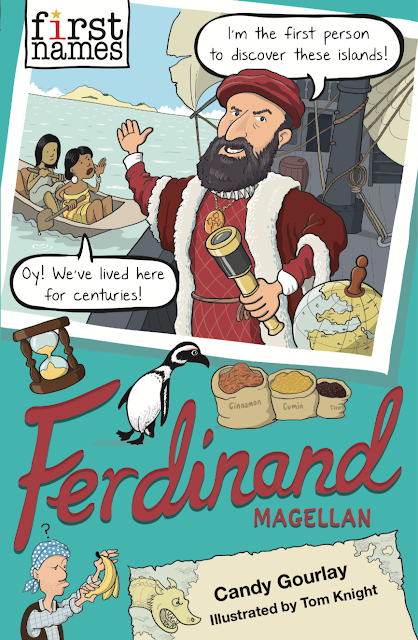
First Names: Ferdinand Magellan by Candy Gourlay Illustrations by Tom Knight


Thursday, 2 January 2020

What kind of author do you want to be?

By Candy Gourlay

The first time I met my agent, Hilary Delamere, she asked me a question that I have pondered time and again. 'What kind of author would you like to be?'

I really had no idea what she was getting at.

I mean, wasn't it obvious?

What kind of author did I want to be? I wanted to be the kind of author who had a published book. That is all.

It was the truth but of course I didn't say it aloud. I don't remember what I said on the day, something witty (hopefully), something that distracted her from pushing for an actual answer, something that didn't make her wonder if she'd made a mistake, signing me up.

But as I grew into my new identity, as I learned about the way the publishing industry worked, as I experienced the doubt, the fear, the feeling of being an impostor that seems to be the lot of the questing writer, it continued to  haunt me.

What kind of author did I want to be?

I am writing this in January 2020 – ten years after copies of my first book squeezed through my letterbox in a large jiffy bag. That book was Animal Tricksters, a sweet, three-story anthology for the Oxford Learning Tree reading series.

It had my photo on the inside page, under the title 'Letter from the Author'. I remember wrinkling my nose. Letter from the Author? The temerity!

I felt oddly reluctant to accept my new title of 'Author' minus the 'Aspiring'. The truth was, I had become very good indeed at being an Aspiring Author. It was my safe space. In fact, all my friends were Aspiring Authors.

I decided to become an Aspiring Author in 2001. I made time for writing. I attended talks and conferences and visited libraries and bookstores. I researched the market. I stalked agents. I treated being an Aspiring Author as a job, and it upset me when people referred to my writing as a hobby.

Though I did have a hobby. Having worked as a journalist before becoming a housewife and mother of three, I was fascinated by magazine and newspaper design. When the internet began its rise in the 1990s, I was excited by its creative possibilities – all  you needed was a screechy modem and a willingness to learn HTML.

I coded a website from scratch called Mum at Work – so called because I seemed to be surrounded by people who thought motherhood was recreation. I made comics about pregnancy and being a mum, I reviewed children's books and books about parenting, and wrote essays humorously extolling the virtues of creativity in domesticity with titles like 'Why we should all be more like Elizabeth Hurley' when the actress appeared with a flat tummy and 10 inch stilletos soon after giving birth. Mum at Work's motto: 'Let's do it all. We're already tired anyway.'

Upon discovering what I was up to, a friend told me, 'You are writing a weblog!' It was the first time I'd heard of a blog (as it came to be known) ... and when, in 2004, newly nascent Google introduced its blogging platform Blogger, I signed up.

By then I was deep in the submission/rejection cycle and searching the internet for clues on how to rise to the top of that infamous thing called the Slushpile.

I decided to call my blog Notes from the Slushpile. I was attending so many How to Get Published events that I had a LOT of material and I decided to use my journalistic skills to write reports on what I learned.

Looking back at those early years of blog posts, I realise now that I was asking myself that question all along. What kind of author did I want to be?

My debut post in 2004 explored race and children's books, reporting on a speech by Farrukh Dondy, who concluded that his first book East End at Your Feet was published in 1976 under a "deviant impulse":
We are still writing books that are basically written for a white audience, published by publishers because they are liberal enough to want to publish it.
Re-reading my piece, I can see my naivete. Although I reported Farrukh's speech accurately, I myself didn't fully understand systemic racism the way I do now. I, like the liberal publishers he was talking about, assumed and unquestioningly accepted that books should be written for a white audience.

When my first novel, Tall Story, was published in 2010, 'multicultural books' had been rebranded 'diverse' books after the government decided multiculturalism as a policy was a mistake. And my unique selling point became – guess! – being a Diverse Author.

I was learning though. In a 2015 blog post titled The Many Faces of Diversity, you could tell that I'd been doing more research on diversity and inclusion. Enough to offer this advice to anyone trying to write diverse stories:

1. Your character's Otherness doesn't have to be The Story.

2. You can't go wrong if your characters are fully imagined.

3. The best story, the one that will captivate readers, should be built on truth and not on agenda.

In my early years as an Unknown Author, diversity panels were how I got invited to festivals and conferences, panels that told (largely white) audiences about the lack of it.

... but what kind of an author did I ACTUALLY want to be?

Did I want to be a spokesperson for diversity? Nah. I was grateful to those diversity panels for relieving me of anonymity. But yeah, I did secretly wish that someday someone would invite me to speak about my writerly enthusiasms ... like Story Structure! I love talking about Story Structure!

Becoming a published author with actual books on actual bookshop shelves forced a shift in my identity. Suddenly, I was no longer the Aspiring Author, pandering to other aspiring authors by writing about masterclasses, agent parties and too much craft not enough story.

Overnight my audience turned into parents, teachers and librarians and I realised, after all the years of blogging about writing and craft and trying to get published, that my new audience wanted to hear about other things: literacy, reading for pleasure, libraries.

I decided to blog about these things on my author website. I recommended books, I blogged about my ridiculous author schedule, I blogged about books I loved that turned out to be racist. The invitations to talk about diversity grew fewer and far between as the book world became more woke to the issues. The years of blogging were good practice for listening and learning about this brave new world that was all about reading rather than writing.

But what about Notes from the Slushpile? I had built a readership of thousands but with the publication of my novel, I no longer had the time to blog consistently and vociferously as I once did. The solution, as all you dear Slushy readers know, was to wheedle my friends into blogging on Notes from the Slushpile. Which I duly accomplished, recruiting Teri Terry, Addy Farmer, Kathryn Evans, Jo Wyton, Nick Cross, Em Lynas and Paula Harrison.


Rather impertinently, several of them promptly got published and it turned out everyone was just as busy as I was. (We were all learning that the Slushpile reaches beyond getting an agent and beyond publication. But that's a blog post for another time).

I can't believe it's 2020 and I've been an Actual Author for a DECADE. And still that question nags me. What kind of author do I want to be?

Looking back, there doesn't seem to be a clear pattern of the sort of Author I've become. My stories are diverse in theme and genre-less. From writing a light-hearted, family-oriented middle grade book Tall Story in 2010, I've gone on to write a darker, older, middle grade about ghosts and family secrets in 2013's Shine, and thence to 2018, with Bone Talk, a novel set in a forgotten historical moment within a cultural context that the gentle, modern reader might find challenging. I've also written a picture book Is It a Mermaid about a sea cow that believes she is  a mermaid, in addition to some books for young readers that have not yet been published (although lookee, Waterstones has already announced that my Ferdinand Magellan book lavishly and hilariously illustrated by Tom Knight will be out in April 2020!)

Shameless self promotion: Filipino peeps will be pleased to know I have written this book. It was Ferdinand Magellan who "discovered" the Philippines. Heh heh I leapt at the chance to retell this story. Four months to publication day!


Looking through my posts on Notes from the Slushpile, I feel like I'm literally watching myself evolve and learn and change as the book world around me also evolves and continues to evolve. I guess the answer has always been there, in my fevered scribblings.

What kind of author do I want to be?


• I'd like to be a Diverse Author...not just because of the colour of my skin but because of the worlds that can be discovered in my stories.  

• I'd like to be an author surrounded by people who love story as much as I do.

• I'd like to be an author who is always learning to be an author.

What kind of author do YOU want to be?


Candy Gourlay was born in the Philippines, grew up under a dictatorship and met her husband during a revolution. Her novel Bone Talk was recently shortlisted for the Carnegie Medal and the Costa Prize. Her picture book, Is It a Mermaid, lushly illustrated by Francesca Chessa, was nominated for the Kate Greenaway Medal. Her novels have also been listed for the Waterstones, the Blue Peter and the Guardian Children’s Book Prize. She lives in London with her family, where she wages war on the snails in her garden.


Friday, 18 January 2019

What Makes a Writer? Busting Myths About Authors ( or not)

Recently Piers Torday, winner of the Guardian Prize for Children's Fiction, made a shock confession on twitter.

He Doesn't Have A Note Book Obsession.

Or even a notebook.

What?? Piers Torday, writer extraordinaire?

What other well-established  myths about writers just aren't true?  Myth by myth, we shall discover the truth through the power of Twitter. I asked fellow writers a series of questions and received nearly a thousand responses - quite astonishing really and proof that number two is beyond question despite the only 71% who owned up.

1. All writers are stationary addicts:

 81% said 'gimme all the notebooks' but very many of that 81% said that they also use technology, such as their phone, to take notes. I fall into that category. I'd love to be a tidy writer who starts a new notebook for every new book but basically, I scrawl notes in one giant notebook but  I use Siri a lot  - especially when I'm driving - I might accidentally write a novel one day called "Hey Siri, take a note..."

Kathryn Evans and her book of scrawl.

2. Born procrastinators, writers spend 90% of their day on social media:

Only 71% of writers confessed to being procrastinators with the remaining 29% split between those who were pretty disciplined and those who had to be disciplined because writing pays the rent.

The figures say one thing but the evidence says another. I genuinely thought I'd blogged about this already but it turns out, I started two posts on the subject and never finished them because I got distracted...YOU SEE, this is evidence based science happening RIGHT here. Also some actual tips to stop procrastinating:

1. Writing a novel means WRITING a novel. Lower your sights,  it's not going to be brilliant first draft. But it's not going to be anything if it's no draft at all.
Get it writ then get it right.
Said someone way cleverer than me.

2. Use an app to help you focus - like Forest.

It costs 1.99 but you can find free versions. You plant a tree and as long as you're working, it'll grow. If you switch off the app you will kill the tree and then you'll be an:
EVIL TREE MURDERER 
who hasn't got any work done.

3. Writers are social hermits whose greatest desire is to have a writing shed:

Image result for writing shed

56% of respondents needed peace to write with 19% wanting their own writing shed. I was surprised at how low that number was  and at the 44% who could write anywhere with 11% actually preferring to be out. I should have asked if they were going to coffee shops...
But look, the truth is,  we can't all have our own writing shed. You write where you can and when you can - but nothing can stop you dreaming so have a little read of this lovely Book Trust post . After you've done your work.

4. It is impossible to write without caffeine:

MYTH BUSTED 44% said they didn't need coffee to power their work and of the remaining 56%, 24% were tea drinkers.

I can't even function without tea though so who these weird people are, I've no idea.

Never far from a cuppa


5. Bad grammar makes us shudder.

This was true for 66% - of the remaining 32%, half pleaded a seventies state school education  which left a generation of adults unable to position an apostrophe, including me. Fortunately, Philip Ardagh  is like a Facebook Grammar Vigilante. A combination of humilation and practical advice led me to a copy of Strunk and Whites Elements of Style sorted me out. I still add in random apostrophe's ( ;) ) just to annoy him but at least I sort of know what I'm doing now.

jacket, The Elements of Style

6.Writers block is real

56% of people agreed with this. I'm not sure I do but I do get stuck. A lot. I walk it off. Take the thoughts out and walk and walk until you've resolved your plot issue or until you've got a scene that will start your novel. Sometimes it take a long time. That's not writers block, that's process. Try and trust it.
Thinking is work for us, it's not all about words on the page.


via GIPHY

Turns out writers are a mixed bunch, so do whatever works for you. We're all different,  a bit like people really. Imagine.


 Kathryn Evans is the award winning author of More of Me. Her new book, Beauty Sleep, is out in April 2019.  Kathryn loves faffing about on social media: find her  on Facebook and Instagram @kathrynevansauthor and tweeting @KathrynEvansInk.  


Friday, 11 January 2019

Making the Most of an Opportunity

By Candy Gourlay

Amazingly, my novel Bone Talk was shortlisted for this year's children's Costa Book Award.

Unfortunately (for me) the other three shortlisted titles –– The Skylarks' War by Hilary McKay, Orphan Monster Spy by Matt Killeen and The Colour of the Sun by David Almond – were pretty magnificent books. The winner, announced last Monday, was the uber-talented Hilary McKay.

On the night, my daughter cheered me up by awarding me with her own version of the Costa. And then we watched laughing baby videos for the rest of the evening.


To be honest, when the shortlist was announced. I was under no illusion about the possible outcome.

But there was no time to waste.

The shortlisting had created an opportunity. There would be more people paying attention to my book – many of whom would not have heard of me before. How was I going to make the most of the time between the announcement of the shortlist (in November) and the winner (in January)?

Opportunities happen all the time in this job. Tiny opportunities that are the building blocks of a platform. I'm not just talking short-listings and prizes. Opportunity also comes in small packages: completing a manuscript, learning a skill, attending a conference, the launch of a book, a positive review.

How do you make the most of your opportunities?

Don't Wait.

I suppose I could have waited until the winner was announced. But the shortlisting was THE opportunity. The winning might never happen (and it didn't). So whatever I decided to do, I needed to do it right away. No putting it off.

We all procrastinate, don't we? I can build that website later, post those photos later, work on those resources another day.

As a former journalist, I am keenly aware of the ephemerality of the news. Something in a blaze of attention today can turn cold and forgotten overnight.

Making the most of an opportunity means doing something while people are still paying attention. They're still receptive, still ready to share your good news. If you get the timing wrong, it will be too late. And you'll never get that white hot moment back.


Reach out to True Believers.

Like many authors, I am my own one-person marketing department. One thing I've learned is you just don't have time to go door-to-door, selling your goods to every individual you meet. Most people don't get this, hence the many invites to do free events because "it's good publicity!". Random targeting is a waste of time better spent writing another book.

Don't go door-to-door, go find True Believers. True believers, in marketing parlance, are people who are already interested in what you have to give. They want to know about you, and they will talk about you to their friends, who are likely to have the same interests. I quoted Seth Godin in a recent piece over on my author blog:

"You put an idea in the world. Not to everyone in the world, just to people who want to hear it. And then maybe it spreads. And if it spreads it grows. And if it grows you get to do it again ... The goal is to go the people who care. To invite them in and to tell them something they didn't know before ... Not with a grand opening but with a whisper. Here, I made this. That's our work."

I've discovered over the years that the people who really make a difference to my book getting read were not the individual punters I met at a festival, nor even the child readers who write me fan mail ... not even my large family in Manila, who have been known to create shortages of my titles by buying up all the stock in local bookstores. The people who make word of mouth happen about books are the children's librarians who champion books and put them into the hands of readers they know will love them. After librarians are the literacy advocates. And then maybe teachers.

Realising this, the challenge is: how do I connect with the people who want to hear about my ideas? Perhaps learning about them is a start, getting to know what makes them tick. This will give me the wherewithal to create work that truly matters to them – carefully considered essays, videos, etc –  rather than just fly-by sound bytes.

Make something that will last.

Yes, social media has made it easy to be our own marketing departments. But beware, the scrolling news feed and the disappearing Instagram story are only good for the moment.

Twitter and Facebook are superhighways that don't stop moving. It's all about reach, but not necessarily about engagement.

To make the most of an opportunity, you need to create things that have lasting value – something that adds to the sum of your public profile, ideas you will be building on, something that you and your audience will learn from, something that readers will continue to discover over time.

It might be a well-written essay filled with nuggets of wisdom that people are always searching for. It might be a How To video that anyone in search of guidance might access. It might be a podcast that can be shared and revisited over and over again.

My years of blogging on Notes from the Slushpile, for example, have made me a better author. They gave me a chance to reflect on the issues of publishing – and thinking is never wasted time. They had the incremental effect of helping me formulate opinions and ideas that I continue to refer to in my writings and presentations. More currently, I find that my writing on blogs and other platforms, has been helping me learn about diversity, cultural appropriation and other issues that, as an author of colour, I am frequently invited to comment on.

For the Costa shortlisting, it was important, I thought, to create something that would outlive the Costa buzz. Something for the immediate audience here in the UK, who are already familiar with the Costa. And something for the audience back home in the Philippines, who do not know about the Costa but who would be so pleased that a home-grown Pinoy was up for the award.

So I recruited the assistance of a couple of videogenic friends – fellow author Sarah Towle and Pinoy artist/editor/writer pal Joy Watford – to create interview videos about Bone Talk.  We made two – one in English, with Sarah, for British readers, and the other, with Joy, in Taglish (Tagalog and English) for Filipino readers.

Filming a Taglish interview with my friend, Joy Watford. We filmed it using the selfie camera of my Android phone  attached to dual lavalier microphones. As you can see, we forgot to tidy the book case behind us.


They were not short videos so I published them on my YouTube channel, which is a platform where people take more time to watch longer form stuff (unlike Facebook and Twitter where a minute is a long time, and people zoom through videos,  often not even bothering to turn up the sound).

The videos are not for casual passers by. I made them for people who are prepared to make the time to watch – maybe someone who's read and loved my book, a teacher who would like to teach it, a librarian who wants to know more so that she can share it with more readers, a bookseller who would like to hand-sell the book.

I'm not expecting masses of traffic. And I'm not hoping for an instant spike in views either. I'm happy for people to discover the videos over time.

"The goal," Seth Godin said, "is to go to people who care." I know this is going to be a quality audience.


Make it matter.

We authors do so much for scrolling newsfeeds. Partly because it's compulsive. You can't help yourself when you feel the the newsfeed's siren call. We pretend that it's work, that it's all in aid of the author platform our publishers expect us to have. But deep down, we know our posts are destined to be forgotten. The social media superhighway moves too quickly and too many people are on the highway already.

So how do we make an impact on social media?

How do we make what we do matter?

Slowing down is one way. Posting less, and leaving your posts there for enough time to be found, to gather attention.

Another way is by being more selective about what you share and when you share it. The less dross you post, the more people take you seriously and want to see what you have to say.

It also means taking the time to put your post into context, so that it's value is clear to the audience. Why am I sharing this? What does it mean to me and my books? Why should it be of value to you?

For the past few years, I have favoured Facebook and Twitter, neglecting my websites and blogs for the ease of microblogging and the instant gratification of the scrolling newsfeed.

But now I want to invest effort into making things that last,  that continue to be relevant beyond the spark that led to its creation. This year, I'm going to test this by using platforms that aren't ephemeral: platforms that won't scroll away and disappear.

I'm ready for a change.

I'm ready to make the most of every opportunity.

I'm ready to make it matter.


Candy Gourlay is leaving Facebook. Read why here and here. Please stay in touch via Instagram, Twitter and via her website www.candygourlay.com

Friday, 24 August 2018

Choosing Character Names by Kathryn Evans.


.


Why do character names matter?

  • If your book is published the world will have to live with your choice for a while. More importantly, you'll have to live with it.
  • Getting the name right will help you develop your character. Sometimes I borrow someone's name that fits my character and change it when I've found a suitable replacement.
  • The right name will help your reader draw a picture of your character and set the time, place  and genre of your story.
Take these few examples:

  • Dr Frankenstein would not have been the same had he been called Dr Faffenbine.
  • Scarlett O'Hara might not have had the same impact as  Poppy O'Lovely
  • Edward Hyde would not have been as menacing as Teddy Dysguise
  • Hagrid would have been perceived differently were he called Hacket
  • Severus Snape would not have been as terrifying as Arthur Apple
  • Peter Pettigrew is the perfect name for a snivelling, grudge holding, pathetic  coward and even hints at what his body can do.


Image result for scarlett o hara
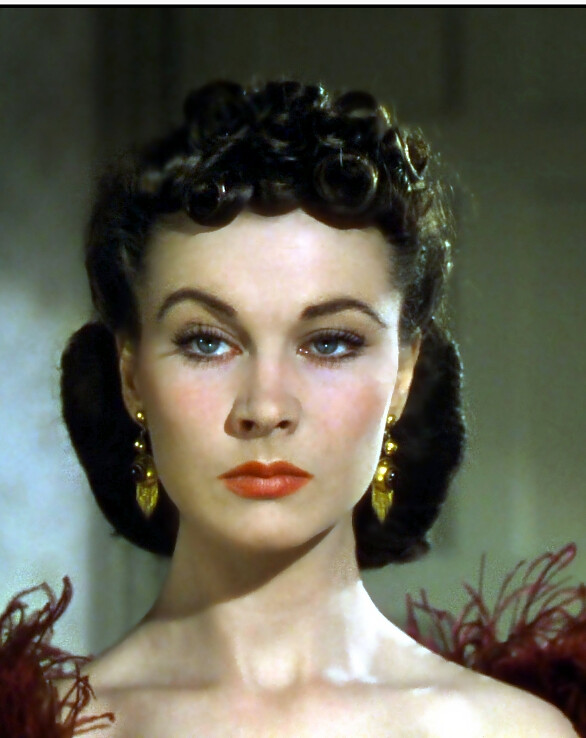
Spoilt, clever, finally heroic Scarlett O'Hara

How do you choose names?

Sound it Out.

Different sounds give us a different emotional responses.
Image result for S

  • Hissing sounds such as s and z can put us on alert.
  • Sounds such as sh and zh are calming
  • Breathy sounds are unthreatening, such as H and F
  • Murmuring sounds are comforting - M and N for example.
  • Snappy sounds such as T and K are slightly aggressive.

Listen to some different names aloud and see how you respond to the sounds.  Does it feel right? Is that how you want your character to be viewed? 

Word Association


Certain collections of sounds remind us of other words. Hagrid sounds a little like 'hug'.  Snape sounds a lot like 'snake.' J.K. Rowling takes great care in naming her characters - it's especially important when there are so many of them. They need to be right and they need to be memorable. Luna Lovegood is another good example - Luna, to do with the moon but associated with loony - and Lovegood, all the pure and lovely things. 

Names from  history can help us out as well - Douglas Adams reluctant hero Arthur Dent in Hitchhikers Guide to the Galaxy has a perfect name. Arthur is steady and reliable,  possibly even boring BUT it is also the name of one of our most famous kings. And just in case the name sounds a bit too heroic, the surname Dent knocks the shine off. Arthur Dent,  it absolutely sums up that character.

Generate by Genre

In science fiction you can use names to establish difference and you can probably make it up - Hitchhikers characters Zaphod Beeblebrox and Trillion immediately tell you those characters are out of this world.

In historical/geographical fiction you need to do your research. In Candy Gourlay's Bone Talk she uses character and place names to conjure a time in Filipino history when America invaded. It's beautifully and accurately done: Samkad, Kinyo, Luki, Tambul names of a time and place.


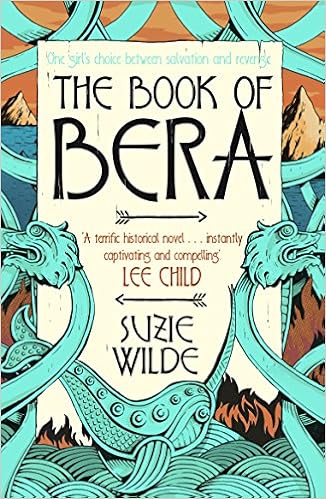
Suzie Wilde does the same in her viking novel the Book of Bera - she uses names to weave a tapestry that feels right.

Where do you find names?


  • Keep cool names you come across. If I like a name, I sometimes keep the post it notes used at book signings to remember.  You could devote a few pages in your ideas notebook for good names.
  • Google baby name lists. You can find lists by decade right back to the early twentieth century.
  • Have a file on your phone so when you pass names of places you can make a quick note next time you stop. There's a sign post for three villages that I drive past sometimes, Norney, Shackleford, Hurtmore. Brilliant surnames that are in my 'one day' file.
  • Steal people's names - sometimes it might be temporary while you develop a character., sometimes it's forever. I've asked people if I can use their names before - they're usually pretty happy about it.
  • The phone book. I know, they don't really exist anymore but I have an old one I keep for this purpose!!
  • Religious texts are great places to find names - and you can associate them with certain stories. 
  • History - J.K.Rowling is . master at this - she knows classical texts, mythology and basic history and uses it. The etymology of her character names is fascinating. 

Image result for bumble bee
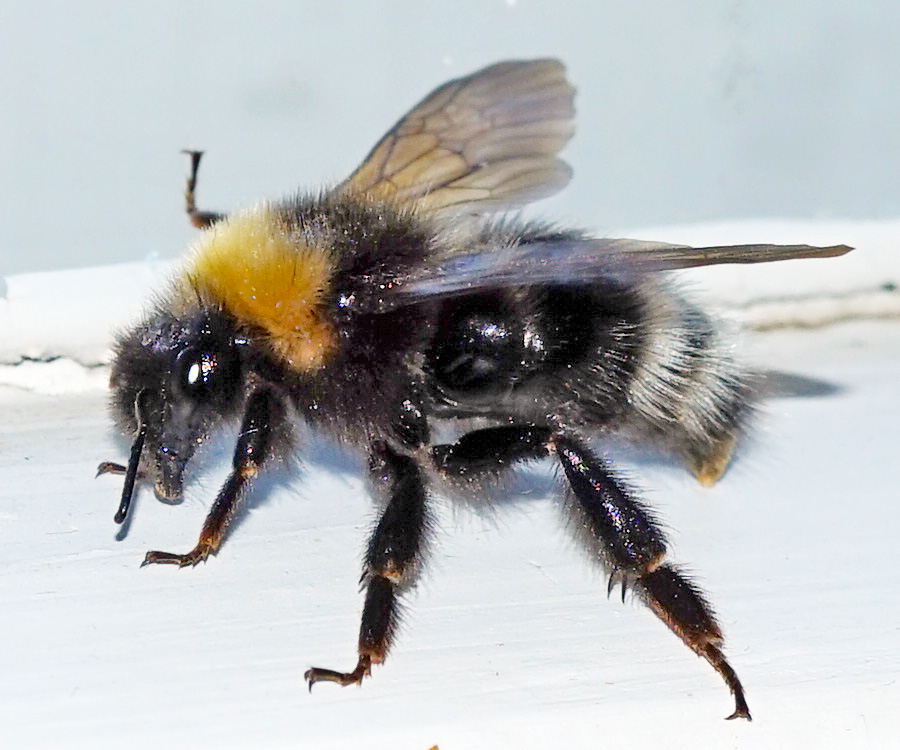
Dumbledore is an archaic word for bumblebee.


I use these techniques  when choosing names. In More of Me, I needed a name  for my main character that spoke of her innocence and corruption by external forces which led me to Eve.  That became Eva because I also needed a name I could morph into new names - the other versions of Eva were originally going to have all have different versions of the same name but that wasn't practical because of school.  I wanted something that sounded brittle and edgy so Eva, became Teva.  It was a happy coincidence that Teva is Hebrew for world/nature.

Teva's best friend Maddy is British with Pakistani parents. Finding the right name for her mattered hugely, I wanted a name that could be shortened to an anglicised version but had roots in her parents heritage. Her full name is Madeeha.

In my new book, one of my characters is called Shem. I wanted a name that told of the boys history but also sound sullen and recalcitrant. Shem was one of Noah's sons who was saved on the Ark. The 'sh' sound smacks of silence, and Shem sounds a little but like 'shun'. Perfect for my character.

Get your names right and you can reinforce character descriptions, or maybe subvert your readers impressions, whichever, if you do it with thought, it will make your book better and your characters  more memorable.

 Kathryn Evans is the award winning author of More of MeA gripping thriller with a sinister sci-fi edge, exploring family, identity and sacrifice. She loves faffing about on social media: find her  on Facebook and Instagram @kathrynevansauthor and tweeting @KathrynEvansInk. 


Friday, 8 June 2018

Countdown to Launching Bone Talk

By Candy Gourlay


It is exactly 35 days until the launch party for my new book, Bone Talk, on the 13th of July. Which is 20 days until the book is officially available in the shops! If you've ever wondered what publishers did to promote their books, here is a behind the scenes taste of the work being done by my publisher, David Fickling Books, to pave the way for Bone Talk's launch.

*In the video I forgot to mention Thornhill by Pam Smy and Wed Wabbit by Lissa Evans (I already had my own copies so I didn't put those in my bag – but now I wish I did, they would make good presents!)

Friday, 15 December 2017

How to Be a Writer

By Candy Gourlay

This is another one of those 'I pressed SEND' blog posts.

Douglas Adams: I love deadlines

MARATHON WOMAN


I've been solidly working on final edits for a few weeks now,  interrupted only by the usual stuff that comes from actually having a life outside books.

Still, I was fairly confident that I would make the deadline, despite an unexpected intervention by Southwest Trains when I found myself spending a day riding cancelled trains and waiting on sidings for fires to be put out.

See, I had colour-coded my chapters on Scrivener, pink for FINISHED FOREVER AND NEVER TO BE TOUCHED AGAIN and blue for TO BE WRITTEN IN NICER WORDS. I could see that my manuscript outline was a sea of pink. There were only four items in blue. What could possibly go wrong? Well. Those blue chapters, it turned out, needed a complete revamp.

And so, dear reader, I did one of those marathon writing things where you write through the night, sleeping for an hour at a time when your eyes won't stay open anymore, while taking frequent showers to fool your brain into thinking it is still fresh.

My editor is usually kind about missed deadlines, but there was definitely a little frisson in her response when I sent her a grovelling message to say I needed more time.

Two days after my deadline had passed with that dreaded wooshing sound immortalised by Douglas Adams, I wearily pressed SEND and stumbled to bed, glancing at the clock on the way. It was 6.45 am.

I think I mostly did a good job in the end. Those are the key words: in the end. Because I spent the whole time on an emotional see-saw:

Fear, as the time ticked on.

Rapture, when I found words.

Despair, when I didn't.


WHAT IS THE POINT?


Several times during this experience I asked myself what the point of it all was. Why I was doing it? What was I trying to achieve? Could I do it again and again? Why would I?

Did writing mean anything anymore?

To my readers?

To me?

When I woke up the next day, I  was so tired I found myself scrolling through wellness articles on the internet.

It being the end of the year, there was a bonanza of them: 8 Ways to Have a Better Relationship in 2018 ... 9 Ways to Live Healthier in 2018 ... 5 tips to Help You Figure Out What to Do With Your Life ...

That last one quoted this advice from Nathaniel Koloc, CEO of a recruiting services company:

Careers are long, so think long term. It's not about what job you want next, but what life you want.


How would all that apply to a writer who started writing books rather late in life? (I am 55 and have written only two books in seven years – in an industry where the consumer outgrows you before you've had a chance to build a body of work. )

Koloc advises workers to pay attention to four categories: legacy, mastery, freedom and alignment.

LEGACY & MASTERY


According to the article, legacy and mastery is about body of work, about 'what you want to achieve and the skills you want to cultivate and strengthen.'

Okay, so I'm putting a tick on that one. One thing you quickly realise when you begin writing books is that it is a life long learning experience.

I always quote Neil Gaiman quoting his friend Gene Wolf in the foreword to American Gods:  'You never learn to write a novel. You only learn to write the novel you're on.'

This is the part I love about being an author, the learning all the time, the figuring out how to do it, the craft.

But the other half of the question is what do you want to achieve?

When I started, what I wanted to achieve was to write a book that children will read and love.  I don't know that all my readers have loved my books, but some must have because they bother to tell me so.

But once you write one book, you have to write another one, don't you? Because author. That's what authors do. But what if my next book is the wrong one to write? What if I get halfway through it and it doesn't work? What if what if what if?

But that is not thinking long term. It's not about what job I'm doing next but what life I want, Mr. Koloc said.

Hmm. Something for all of us to think about.


FREEDOM


The article defined freedom as 'the conditions you need to have the lifestyle you want, like salary, benefits, flexibility.'

The funny thing about being a children's author is that people are constantly offering you opportunities to promote yourself by appearing for free in a festival/book group/conference/talk. It always comes as a shock when they discover you want to be paid.

Most authors I know make their living from speaking engagements. The book itself does not make enough money to put socks on one's  children's feet. So in effect, this thing you had yearned for, that you created with heart and soul, turns out not to be the living you want to make. It's merely an entrance ticket to the world of paid performance.

But again, I am focusing on the next thing rather than the life. Where the money comes from is relevant, but what it's there for is to enable the life I want.

Hmm. There it is again.


ALIGNMENT


Alignment, Mr. Koloc says, is about belonging. It's about culture. It's about values.

When I was still a struggling-to-be-published-rejection-punching-bag, I made one of the best decisions of my life.

I decided that I wasn't going to wait to be published to live the life of a children's writer.

I joined an organisation called the Society of Children's Book Writers and Illustrators so that I could hang out with people like me. I love SCBWI. Even now as a published writer, SCBWI is where I continue to meet the best people to hang out with.

I attended every talk about writing children's books that I could find. I was learning. I was immersed.

And then, most important of all, I began to write, which really ... if you want to write, is the thing you have to do. You don't become a writer by saving it for when your children are grown/your job is easier/your dog is potty trained. You just have to do it – which I am proud to say, is what I did.

I suppose this blog post is me, after a particularly tough time, trying to remind myself of why I spent the last few days banging my head on a keyboard.

Yes, it's been hard ... but it was all part and parcel of enabling the life I want.

So many of my friends in the children's writing world tell me they feel fraudulent, that they can't call themselves authors until they've got that publishing deal. According to Mr. Koloc: that publishing deal? It's just the next thing.

Ask not how you can become an author, ask how you can live an author's life.

You're probably living it right now.


Candy Gourlay is the award-winning author of Tall Story and Shine. Follow her Facebook page to receive posts on reading and writing children's books. Visit her website to book her for school visits and other speaking engagements. Read Candy's previous Slushpile post: Why I Changed My Mind About Facebook Pages for Authors


Friday, 13 October 2017

Why I changed my mind about Facebook Pages for authors

By Candy Gourlay


For the past two years now, I've been co-running a Boot Camp for debut authors with writing pals Sara Grant (Chasing Danger) and Mo O'Hara (My Big Fat Zombie Goldfish).

The three of us bring useful skills from our real lives: Sara has worked in public relations and talks about strategy; Mo is a stand up comedian and an actress and talks about performance and school visits ... and me? Well I'm a former web designer and an all around geek – my role is to discuss how authors can take advantage of the digital opportunities available.

Mo O'Hara discussing the art of the school visit.

Sara Grant showing off her author kit in front of a board scribbled with the hopes and dreams of our audience.
Here I am with a roomful of debut children's authors behind me.
In past years, I have written a lot about author promotion, dishing out practical advice about websites, building a platformhow to do Skype visitshow to do Google Hangouts, how impoverished authors can make their own book trailers (part 1 and part 2), how to plan a book launch party and Facebook pages.

The very nature of digital opportunity is so fluid, what with technology constantly changing, that the advice is never the same. Looking back at a 2011 post I wrote about building your own websites, for example, so much has changed in the online world that I should really put up a warning note at the top of the piece, pointing out that I wrote it six years ago. Six years is a long time in a digital world.

Ten years ago, when the internet was just beginning to pick up speed, everyone suddenly decided that  authors must blog. Well the graveyard of defunct author blogs is now full to overflowing as a result. Later, Twitter seemed to have The Power. Today, thousands of books are not getting written because their authors have become Twitter addicted. While Twitter is a social network that connects individuals, it's not a great place to actually sell books. And then there's Facebook, virtual hang-out to two billion of the world's population.

At the beginning, Facebook introduced the 'fan page' – a thrilling way for authors to connect directly with fans who are on Facebook. Soon though, Facebook decided to 'monetise' fan pages via what one pundit called a 'bait and switch' – hiding your FB posts from your fans so that you will pay for them to be shown.

I was so disappointed I wrote a piece declaring that there was no point having a Facebook page unless you're JK Rowling and your fans willingly visit your page instead of waiting for you to appear on their feed. So for the past few years, I've been using my personal FB profile, instead of an official fan page, to connect with my readers.

But I kept an eye on Facebook. It's a no brainer that anyone wanting to be discovered should cultivate a good FB profile. But how?

In December 2016, I noticed that under the relatively new button 'Following' on every Facebook Page, a new menu was popping up (pictured right).

It gave fans the following new choices:

• They could UNFOLLOW your page so that they didn't have to see your postings, even though they liked the page.
• They could tick DEFAULT and let the FB algorithm decide how much or how little they see of the page.
• Or they could select SEE FIRST so that they could see your all of the page's posts on their feed as soon as they are posted.

Suddenly the game changed.

Facebook was giving users a way to keep track of pages that they absolutely wanted to see.

Yes, FB is still trying to encourage us to pay for promotions. But the social network has also realised that they have been alienating the people who create the content that makes the network social in the first place.

For us authors, it gives us a fighting chance to be discovered.

Book launch guru Tim Grahl says never make it about you, the author ... he says:

'Always focus on helping the reader'.

With the new improved FB pages, we now have the opportunity to post such compelling content that our readers will want to click SEE FIRST because they do not want to miss out. Tthink about all the things you find so compelling that you are moved to share them on your feed: heartwarming videos, surprising facts, amusing quizzes, urgent news ...

So what content can you create that will persuade your readers to click that SEE FIRST button?

The answer lies in several things:

• Your identity as an author.

• How useful/beguiling/compelling your content is to your reader.

• How original your posts are

• How much value do you, as author, add to what you post

Considering your identity, it might help to see how other authors are playing themselves on Facebook - Junot Diaz posts about social and political topics, if you're a fan of Neil Gaiman, you get to hear that gorgeous voice and witness the disarray of his hair in his videosJohn Green posts about nerdy stuff, Kate DiCamillo (whose readership probably most matches mine) posts inspirational stories.

Me, I avoid politics but on my FB page, I comment on reading, writing and getting published (in childrens' books). As an 'author of colour' I am deeply concerned about diversity and inclusion. I use my skills as a former journalist to report on book events (you are welcome to read my blog post: Social Media: eight things we can learn from old-style journalism). It's also a chance to take photos and make videos (which I love!).

As for adding value – never post in a vacuum! Imprint every posting with the value of who you are – with a comment, a thoughtful reflection, a wise interpretation, a personal anecdote.

I only started my Facebook Page at the beginning of 2017 though I don't have a new book out until 2018.  I thought this would give me time to get to grips with the page, create fresh content and build an audience. If you're interested in following my progress, please like my page ... I really try to be useful. Oh ... and don't forget to click on SEE FIRST.

How is my FB page doing so far? Well, I'm feeling very positive.

Videos are a big hit, especially if they're about picture books. I am trying to do quickie interviews with the interesting people I meet – most recently, at the Pune International Literary Festival in India (see the playlist) where I interviewed a range of fantastic folk, from student volunteers to venerable literary stars.

The photo albums covering book launches (such as my friend Katy Dale's) and other booky events (like Melvin Burgess' nomination to the Hans Christian Andersen award, the Carnegie-Greenaway Awards, and the Dubai Literary Festival) attract many visitors (the secret is in the tagging – learn how to like other pages as your page). Some random visitors who come to look at pictures actually end up liking the page! I've noticed that the more original my posts – original here meaning, nobody else has posted it – the better it is received, with more likes, comments and shares.

As for links posting, I am always on the look out for interesting links, and so I find myself following good pages that serve up useful information that suit my page's personality. For example, I love the posts on diversity by Lee & Low Books (a multicultural publisher in the US) and have reposted some of their links. One of the most popular links I posted was an article by the author Grace Lin discussing Dr Seuss's early racism in his work and how he changed. I had more than a thousand hits in two days. A photo of my feet in Little Prince Socks on the day I went to my first day as a judge on Booktrust's In Other Words Competition got thousands of views though only eight likes! Why?


Still so much to learn. I'll report back in 2018 after my new books come out. Watch this space!


Candy Gourlay thought she could not become an author while growing up under a dictatorship in the Philippines and became a journalist instead – but she was wrong. Years later, her novels Tall Story and Shine have been listed for many awards including the Waterstone’s, the Blue Peter, the Carnegie and the Guardian Prize.

Share buttons bottom

POPULAR!