Wednesday, 16 October 2013

SCBWI Agents' Party 2013 - or 'how to make someone fancy your book'

by Addy Farmer


Hear what the lovely writers' agents said at the SCBWI Agents' Party 2013. It's all about the love ...

Vicki Le Feuvre of Darley Anderson
Hannah Shepherd of DHH literary agency
Emma Herdman of Curtis Brown
Sallyanne Sweeney of Mulcahy Associates


So, once the crammed masses had settled down, we listened and learned...
Here's what all those agents want. It's easy.
'Brilliant story, fantastic characters and a great voice.'
Got all three? Then sub away to any of the agents who attended the Agent Party...

BUT wait! Take a step back, a deep breath and a firm grip on your running trousers and ask yourself - are you sure you're ready? Let's take a closer look at what those agents said...

How NOT to start a story and other introductions
Sallyanne said do not use 'loads of alarm clocks' and get rid of all that panicky exposition. You're the one in charge, you can let the story reveal itself gradually. As we all know, sometimes it's best to start at the second chapter.

Emma talked of 'cover letter frustration'. To anybody who is in doubt about how to address a female agent... use Ms or first name. Make a small effort and it's not difficult to find the right person and spell their name properly.

For your own sake, 'no generic subs!' Tailor it to match.

Everybody agreed that multiple submissions (although The Blair Partnership prefers exclusive subs) are fine but be up front about who you've subbed to.

Vicki was firm in her starting no-nos
'No mirrors and no weather and be careful of prologues.'
Prologues can be used as 'info-dumps' and this WRONG. A prologue can establish a world, a prologue can even be chapter one because it is something out of the timeline of the story e.g. Harry Potter.


When is a Work-in-Progress ready?

Emma said that the book should be complete! Not just the first three chapters and a synopsis. If an agent reads something and gets excited about it, she will want the rest of it NOW and not when you get round to completing it in six months time.

Do yourself a favour and resist sending in your work before it's complete because if nothing else, 'there are so many others who have finished the whole thing.'
Sallyanne pointed out that you should treat the remainder of your story just as you would the first three chapters - the shine should extend to all of your work!

Ask yourself - do you love every piece of your book? Are you ignoring the annoyance you feel with those floppy flabby passages or the thin, twiggy words? You've got to love all of this work because as all our agents said in one way or another,
If I take something on, it's got to be something I absolutely love.
Jane Eyre and Mr Rochester - love is blind?

The Synopsis
What's the role it plays and who reads it?

No synopsis is necessary for picture books. For longer work,
All the lovely agents agreed that they were more interested in the actual writing and that they,want the first read to be the reader's experience
The synopsis should be as short as possible (less than one side). You should treat it as a check to see where the story is going and that means including spoilers. Tell the story as straight as you can and try to reflect the genre and age.
Oh, Heathcliffe! Oh, Cathy!

How Quickly do you Make up your Mind?

Title - no
First sentence - no
First paragraph - no
First page - probably.

It's like seeing someone you fancy... you know if you don't fancy your book.
It can't just be sellable but it has to have a voice which sings. As well, it can't just have a voice, it also has to be sellable. Then again, all our agents were keen to let us know that they were with their clients for the long haul. Emma worked for three years on a book with a client. Then she subbed and sold it!

Romeo, Romeo - wherefore art thou, Romeo?

Top Tips

Sallyanne said

Write the story you want to write and not to the marketplace

Hannah said

Be persistent and be wary of jumping at the first agent because you need to get on with them

But most of all, remember that agents are human beings too. Emma always wakes up thinking,

Is there anything good? It's never a chore.

They actually want your story to be brilliant. Do your best and make sure that you can't do any more.
So, now you're good to sub. Good luck (that helps too) and remember it's all about the love. What else matters?


Saturday, 5 October 2013

Authors will have choices - thoughts on the morning after the Agents' Party

By Candy Gourlay

Last Thursday, I attended the Agents' Party, a yearly SCBWI event that I stopped attending when I got signed by my agent a few years ago.

The Agents' Party used to be the highlight of my year on the slushpile and I kind of missed being a part of it ... so I decided to go, if only for the social life.

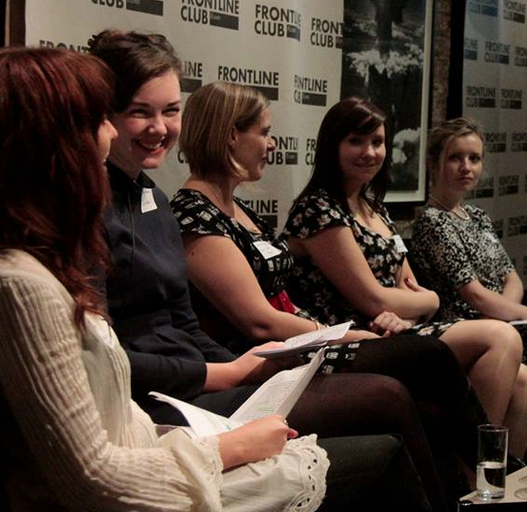
Left to right: Hannah Whitty of Plum Pudding, Emma Herdman of Curtis Brown, Hannah Shepherd of DHH Literary Agency, Vicki Le Feuvre of Darley Anderson, Sally Ann Sweeney of Mulcahey Associates.
The agents said all the things that one would expect  and that we on the Slushpile have heard so many times before -  to get an agent, WRITE A GREAT BOOK. If you're a Slushpile newbie and have never heard the agents say this in their many ways, do check out the Facebook photos - I typed up the little write-ups on the leaflet about what they're looking for in the captions.

(For your convenience - and because I couldn't resist the new Facebook feature - I've embedded the FB post about it at the end of this rumination)

Pressure to change

This is an interesting time for agents. I don't have to rehash how dramatically the publishing landscape has been changing - a metamorphosis that is fast, fickle and unpredictable.

The pressure means that to succeed, those lovely young agents sitting in a row have to be more creative, have sharper eyes for talent, and have bigger balls than most.

Hannah (left) and Emma in front of a rather startling photo at the Frontline Club venue.
Indeed, the first agent to speak, Hannah Whitty told the extraordinary story of how they saw so much promise in the character work of an illustrator that they persuaded her to author a series. Three books have been published and three more have been commissioned. (Hey Kate Pankhurst, good job!)

Emma Herdman described Curtis Brown's involvement in the "slightly scary" Discovery Day at Foyles - in which agents responded to excerpts and pitches from authors. The net is being cast wide, and the agents are doing more than just sitting at their desks watching their slushpiles grow.

I'm sure it's not just me - agents, editors, publishers - they all seem to be holding conferences, seminars, workshops for aspiring authors.  Now that the author has the power to cut gatekeepers out of the chain, there are changing perceptions about who is serving who.

Following the money


In the latest edition of The Author, the Society of Authors magazine for members, Nicholas Clee (Bookbrunch) describes how various agents are trying to follow the money.

Clee tells the story of how literary agent Ed Victor has become a publisher - his imprint Bedford Square Books published ebooks and print-on-demand "that without exception publishers have turned down".

It is Victor's rule to go to a publisher in every case and ask: 'Would you like to publish this wonderful book? If you don't, we will.' Publishers: the bigger the better? by Nicholas Clee, Autumn 2013 edition of The Author

Victor points out that the better deal for the author would be with Bedford Square (50 per cent of proceeds minus costs) than with the publisher (25 percent).

(Helpful note to aspiring children's authors: Sophie Hicks handles children's books at Ed Victor)

Clee also describes the approach of the agency Curtis Brown who pioneers in author assisted self-publishing. Here is something about author assisted self-publishing from the Jane Friedman blog:

With independent author success on the rise, the role of agents has taken a precarious turn for the unknown. Many agents are seeing fewer sales and lower advances (which equates to lower income), and are looking for ways to keep their heads above water. One path that some have taken is agent-assisted self-publishing. By Melissa Foster. Read the whole thing after you finish reading my blog

Curtis Brown MD Johnny Geller tells Clee: 'I don't describe us as a publisher' - but the Curtis Brown list can be regarded as 'a training ground or a showcase'. Plus: they have had the odd bestseller or two.

Under Amazon's White Glove service, Amazon gets 30 percent and authors get 70 per cent, paying the Curtis Brown the usual commissions. Editorial and marketing services are purchased from the Whitefox agency.

In his article, Clee writes:
Ed Victor and Jonny Geller both believe that their authors will choose to go with well-known imprints when the option is available; and these agents' deals enable their authors to take up alternative offers should they arise.
It's not SELF publishing anymore is it, when professionals are involved?

Clee ends his article declaring that whatever happens in the near future it looks like 'authors will have choices' - and the choices that belong to the traditional world ought to realize that soon.

Indie-publishing is here to stay

The usual questions were asked about self-publishing at the Agent's Party - and it was interesting to hear how positive the agents were ... in previous years, agents could be quite sniffy about authors who had already self-published their work.

I thought there was excellent advice to be had from this blog by Nicola Morgan on why publishers might not want to publish you once you've self-published your novel.

Self-publishing is a strategy. But there are different intended or desired goals. If the goal is becoming published by a publisher, then you need to understand how publishing works. And it doesn't work by republishing books that haven't sold squillions. Nicola Morgan blogging in Help! I Need a Publisher

At the same time of course, the minority who have succeeded in getting publishers to fall in love with their self-published work appear to have spectacular success.

Which brings me to the big news in the SCBWI world today. SCBWI HQ has just announced a new prize: the SPARK AWARD - recognizing excellence in a children's book published via a non-traditional route. Read about it here.

It is time that SCBWI recognize that there are new models for publishing. The Spark Award is one way we can reward those authors and illustrators who are pursuing independent and self-publishing in a legitimate and high quality way. SCBWI Executive Director Lin Oliver and President Steve Mooser

So there you have it. Indie authors have joined the ranks of legitimate.

Which begs a question to this long term denizen of the slushpile: where does the slushpile belong in this unrecognizeable new world?


With big thanks to Michelle Newell who did a brilliant job organizing the Agents' Party. If you're reading this and wondering 'What in the world is SCBWI?' you can find out more about the organization here. Below is my Facebook album on the Agents' Party embedded - if you can't see it, you can view it here (you might have to be logged into FB).


Sunday, 8 September 2013

The Pursuit of Happiness

By Candy Gourlay

I saw this on Facebook the other day:


It was on a Buzzfeed list called The 30 Happiest Facts of All Time and sure enough, it made me so happy I told everyone I met about it and now I'm telling you and I hope it's making you feel just as joyful.

The fact is, I have reasons beyond otters holding hands to be happy.

If you were on Facebook last Thursday, you might have spotted this:


But on the day, I was up at 4am worrying about whether I was doing enough to tell the world. And then I worried about whether fans of Tall Story will be put off by the fact that it's darker and older. And then I worried about the fact that its official release date was the 5th of September - someone in the know told me this is the worst publication date possible because you'll be competing with all the book heavies - Meg Rosoff! Patrick Ness! - launching in time for Christmas. And so on.

Remember 'What Me Worry?' Alfred E Neumann's catchphrase?  

I met a friend for lunch and I must have managed to drip anxiety all over him because he told me, kindly: 'You do realize that there are many who would like to be in your position."

Yes! BUT BUT BUT BUT!

And then I shut up.

Because all these fears had nothing to do with the moment at hand. At long last, Shine is out. And I should just celebrate.

As you may know, it took me ages to write Shine. Three years in fact. It was a slog. And during the slog, I sometimes became sentimental for the days when I was just another writer on the slushpile, when I didn't have anyone waiting to read my latest book.

Yes, yes, you may hate me for confessing this - but hear me out.

What I want to say is that ... it really was lovely when the dream hadn't come true yet.

There were no bottom lines. My next book didn't have to be as good or better than the previous one. There was no readership to disappoint. I was in the tight embrace of a lovely group of people who shared my passions and aspirations. We sorrowed over our rejections. We rejoiced over our craft. All my desires were still to come true - and it felt good.

Being hopeful feels good.

It was only when my dream came true and Tall Story was published in 2010 that FEAR came into the picture. Looking back over the past three years, I realize that I didn't give myself enough time to truly rejoice in my good fortune. Sure, I was HAPPY because I am a happy sort of person, but I was engrossed, rushing from thing to thing. Promoting the book, doing school visits, networking, writing and rewritingthe next book.

I was busy trying to prevent all the bad things that could happen.

No. I didn't take time to smell the flowers.

My lunching friend later sent me a TED video featuring Dan Gilbert (@dantgilbert), author of Stumbling on Happiness in which he said:

We treat our future selves as though they were our children, spending most of the hours of most of our days constructing tomorrows that we hope will make them  happy. Stumblling on Happiness

In his TED talk, Gilbert said getting what we want doesn't bring us happiness. According to Gilbert, if we want to be happy we can MAKE ourselves happy (he calls it synthesizing happiness).

He had lots of surprising examples - comparing the happiness of people who had won the lottery and people who became paraplegics, people in jail, people who had lost everything. The people who had endured the worst always came out on top. They were happier than the people whose dreams had come true. You can watch the video below (but only after you've read my post).


Here is Gilbert's take-away:
The lesson I want to leave you with from these data is that our longings and our worries are both to some degree overblown, because we have within us the capacity to manufacture the very commodity we are constantly chasing when we choose experience.

Basically he's saying, everyone can be happy if they want to be.

Watching the Dan Gilbert video led me to watch a bunch of other TED talk videos. There's nothing like a TED talk to lead one astray from all the hustle and bustle of being an author with a new book in the shops.

Here is one featuring Benjamin Zander that is luminous with joy (it may be about classical music but it taught me the art of writing on your left buttock)


By the end of that afternoon, I was inspired, moved, high on ideas ... and happy.

Sometimes we're in such hot pursuit of happiness that we don't notice it's right where we started.

Come on everyone, let's raise a glass to all the authors who recently launched a book  - HAPPY BOOK BIRTHDAY! And I mean happy.

You might be interested in my recent postings. Click on the thumbnails to view:

How to Become a WriterMy Video ReadingUnboxing First Copies 


Q&A at Tamarind BooksRiffing on Rain in ShineShine Book Trailer

Share buttons bottom

POPULAR!